Showing posts with label family. Show all posts

Monday, June 13, 2022

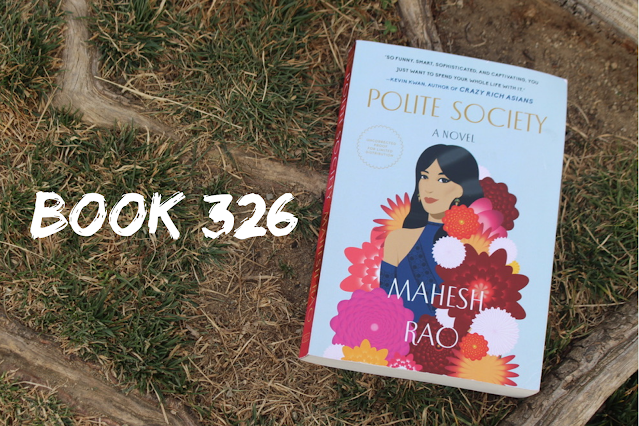
Book 326: Polite Society


"As Dimple waited for Fahim, she doubted Ania's wisdom for the first time. There was no convincing reason why Fahim would be attracted to a woman like her, obviously provincial, still at times cloddish, when he had the pick of those sophisticated gazelles at media parties. Ania had kept insisting that she could see the signs. but Dimple was worried about the dangers of being wrong. It had taken her months of discipline and training to calm the anxieties that assailed her—worries about her position as some kind of interloper—and now her equilibrium was again wrecked. Ania was too fearless and her friendship too effortless, spilling from her without consequence, leaving a trail of easy generosity and advice. For Dimple that same friendship offered elation and play, but also apprehension and uncertainty, a fear that it would all collapse and crumble to dust."

Dates read: July 9-12, 2019

Rating: 7/10

A few years before I started this blog, I started making a concerted effort to read the much-bemoaned classics. I wasn't an English major (Psychology for me!), so apart from the standard high school mandatories like Gatsby and Mockingbird, I had read actually quite few of them. And what a surprise it was! While some of them deserve their boring reputations, many others have survived the test of time because they're wonderful reading experiences. Turns out I love Jane Austen! Who knew?

When she wrote Emma, Austen famously described her as a heroine that she didn't think people would really like. A smart, pretty, rich girl isn't exactly the most sympathetic of heroines. Clueless proved that Emma could hold up well to adaptation, so when I read that Mahesh Rao had decided to transplant the book to modern-day India in Polite Society, I was curious. Instead of Emma Woodhouse, we have Ania Khurana, beloved daughter of wealthy businessman Dileep. Ania is bored with her socialite life in the most elite circles of Delhi, and when she successfully sets up her spinster aunt Renu, she decides her next project will be her new friend Dimple, who works in PR. Dimple grew up in the country, and though she met a nice guy, Ankit, when she first moved to the city, finds it hard to resist when Ania tries to steer her towards up-and-coming reporter Fahim.

While many aspects of the original are here, Rao puts his own, darker spin on some of the side characters: both the Frank Churchill and Jane Fairfax types have very different storylines than Austen gave them, and Dileep is drawn dangerously into the thrall of a faith healer type called Mr. Nayak. The broad strokes of the story play out more or less as expected, though: Fahim does not fall for Dimple and marries impulsively shortly thereafter, Ania grows closer to her longtime family friend Dev (standing in for Mr. Knightly) even as she develops a flirtation with the Frank substitute, Dimple and Ankit come back to each other eventually. But while Austen wraps things up neatly and happily, it's much more unsettled at the end of Polite Society.

Taking a beloved story and adapting it is a tricky thing to do...too close to the original, and it barely seems worth the effort, but too far away and you risk enraging fans. I think Rao struck a good balance, adding plot twists that gave the story new complexity. I especially liked the addition of perspectives besides that of Ania, which had the effect of giving Dimple, Dileep, and even Fahim so much more richness and interest. I appreciated the generally edgier tone and the way it undercut a story that has a lot of romantic wish fulfillment and froth built into it. The story the book tells is compelling, and I think would work even without having read Emma (though the understanding that the heroine is supposed to be kind of annoying is definitely helpful to come in with).

While I enjoyed a lot of what this book did, it was not entirely successful. Rao's prose lacks the wit and verve that really mark Austen as a master of her craft, and is less charming as a result of the inevitable comparison. And while many of the side stories were a welcome addition, it felt like there were too many to give them all time to really develop. The generally lightweight tone of the book (even in the heavier way Rao rendered it) would be compromised by the addition of too many extra pages, but I think another 50 or so would have given it all a little more room to breathe. Overall, though, I found this book very good and would recommend it both to those who already love Emma and those who haven't experienced it yet!

One year ago, I was reading: The Death of Vivek Oji

Two years ago, I was reading: A Perfect Explanation

Three years ago, I was reading: The Coming Plague

Four years ago, I was reading: Love Medicine

Five years ago, I was reading: The Man Without A Face

Six years ago, I was reading: Zodiac

Thursday, January 27, 2022

Book 320: There There


"He moves in front of the mirror and his feathers shake. He catches the hesitation, the worry in his eyes, there in the mirror. He worries suddenly that Opal might come into the room, where Orvil is doing..what? There would be too much to explain. He wonders what she would do if she caught him. Ever since they were in her care, Opal had been openly against any of them doing anything Indian. She treated it all like it was something they could decide for themselves when they were old enough. Like drinking or driving or smoking or voting. Indianing." 

Dates read: June 7-10, 2019

Rating: 8/10

Lists/awards: American Book Award

DNA tests can do cool things these days. Not only does mine show me that I'm part Polish, it can even identify the area in Poland where my family came from! Does it actually matter, at the end of the day? Well, no. If I ever do visit Poland, it would almost certainly be to go to one of the major cities, not the tiny village in Podkarpackie Voivodeship that my great-grandfather left over a century ago. But it's interesting to be able to confirm that tie to the past, to get a better sense of where I come from and what my family's story is.

For Native Americans living on reservations in a community that includes elders, a sense of connection with the past is probably more tangible. But of course, that's not where all Native Americans live. Plenty of them live in cities, and it's an attempt to put together a pow-wow in Oakland that brings together the characters of Tommy Orange's debut novel, There There. Through changing point-of-view chapters from a wide cast, the book tells the story of how the pow-wow brings people together in unexpected ways...and what happens when a group of young men eye the prize money for the dance competition as a target for robbery. Common throughout are the questions the characters have about identity, and what it means to be an Indian in a large city.

The character wrestling most with identity and meaning is Dene Oxendene, who wins a competition for grant money that he intends to use to record Indian people telling their own stories about their lives. He sees the pow-wow as an opportunity to film many people at once. But there's also Edwin, whose interest in participating in the event, and breaking out of his self-imposed social isolation, is sparked by the discovery of his Indian father via social media. The internet is also how teenage Orvil tries to connect with his culture, as his stern grandmother Opal Viola Victoria Bear Shield (who was taken to the AIM takeover of Alcatraz as a child, along with her sister Jacquie Red Feather, by their unstable mother) who is raising him and his brothers refuses to talk about being Indian with them. Orvil learns tribal dances from YouTube, and plans to enter the dance competition. But the internet also provides a group of young men (including Tony Loneman, angry at the scorn he's received because of his fetal alcohol syndrome) with the schematics to 3D print guns from plastic that could be snuck past the metal detectors at the pow-wow, so they can get money to remedy a drug deal gone wrong.

Tommy Orange is a dazzling talent and this is a very good book. I would say that the only thing holding it back from greatness, for me, is that I wished it was told with a more traditional story structure. While each character's perspective was distinct and important, I found it hard to keep track of who everyone was in relation to everyone else, and a more well-delineated central narrative thread would have, for me, made the book's impact even more powerful. But the reality is that it's powerful anyways. I really cannot overstate how good Orange's writing is. These characters feel like they actually exist in the world, like each one of them, no matter how small a part they play, have full lives and histories that we're only able to get hints of. He switches back and forth between first- and third-person perspective, and even writes one chapter in the second person, which didn't add anything narratively as far as I was concerned as much as feeling like the exuberance of an artist pushing at the boundaries of what he can do.

In a way, this felt like an answer to one of the most well-known writers of Native American adult literature today: Louise Erdrich. While Erdrich's work focuses primarily on women, particularly older women, on reservations in the northern Great Plains, Orange's novel highlights men, especially young men, in a large Californian city. What they share is a story structure in which there are multiple characters that are the focus of one chapter at a time in a non-chronological narrative, as well as a focus on how to live in the world as an Indian today. Erdrich, who has won the National Book Award and been a finalist for the Pulitzer Prize, is a big name to invite comparisons with, but Orange lives up to it. This book is a must-read, and I can't wait to see what Tommy Orange does next.  

One year ago, I was reading: All Girls

Two years ago, I was reading: Followers

Three years ago, I was reading: Bad Blood

Four years ago, I was reading: Mansfield Park

Five years ago, I was reading: Bury My Heart at Wounded Knee

Six years ago, I was reading: Creative Mythology

Thursday, January 20, 2022

Book 319: Good Riddance


"I was never someone to let things go, and I wasn't going to start now. Besides being furious and impatient, I was worried that word would have gotten around Pickering. What if some bigmouth wrote to my father with misguided congratulations about how his late wife's yearbook had made the big time?" 

Dates read: June 3-7, 2019

Rating: 2/10

I think Facebook has destroyed the high school reunion. Where once upon a time people might have shown up to find out who got married, who got divorced, who succeeded and who didn't, now all of that information is available online on demand. If I want to know if the girl who was awful to me my freshman year had her life turn out okay, I can click over to her profile and see what she looks like and her husband and kids and where she works. It takes the mystery out of it. And once you get that primal gossipy urge satisfied, is there really a reason to go? Aren't you probably still in touch with the people from that time in your life that you want to be in touch with?

I do still have all my yearbooks, and when I go home I like to fish them out from my mom's attic or garage or wherever she has them now and look back at them, at the teams and the teachers and the classmates who managed to avoid social media, and read the notes from the people who I sat next to in fifth period Spanish and then never spoke to again. In Elinor Lipman's Good Riddance, Daphne Maritch inherits her mother June's cherished yearbook after she dies and isn't really sure what to do with it. It isn't from her mother's own high school years...rather, she served as the faculty advisor for the yearbook staff for the class of 1968, when she was herself a very young teacher, and kept detailed annotations on the lives of the students of that class. In a fit of decluttering, Daphne decides to toss the book. Only to have it turn up back on her doorstep, in the arms of a neighbor, Geneva, who thinks she wants to make a documentary out of it.

Though initially upset by the purloining and potential commercial exploitation of her mother's once-prized belonging, Daphne agrees to accompany Geneva to the next reunion so she can begin research into the students in the class. While there, she learns a secret about her mother that calls into question everything she thought she knew about who her mother was. With the help of her cute, younger across-the-hall neighbor Jeremy, things escalate into increasingly wacky hijinks as she tries to stop Geneva's plans from moving forward...and tries to help her now-widowed father cope with his move to join her in New York City and maybe find love again himself.

There's a good story to tell based on this general concept, I think, but it's not this one. I've always maintained that truly funny books are some of the most difficult to write, because it's so easy for the humor to land wrong, for the balance of real feeling necessary for people to care about characters and the funny stuff to wind up off. Lipman's book is not all successful in finding a balance, mostly because it seems to forget that it needs to be grounded in reality at all. She gives Daphne a sympathetic story (swept away by a charming man...who, it turns out, needed to be married to fulfill a condition of inheritance and had no interest in anything like fidelity, and so is now divorced), but barely gives us any time to get to know her or care about her before getting into the machinations of the plot, so I never connected with her. Which meant that I didn't really care about her relationship with her father, or her budding relationship with Jeremy, or if she'd ever put a stop to Geneva's yearbook schemes.

I can tell the plot is supposed to be madcap and absurd in a funny way, but it turns out the idea of having life-changing revelations delivered to characters in bathroom stalls with virtually no build-up just doesn't really work. The stakes are too high to be this breezy about it. It at least moves along briskly, but that's more because it doesn't seem to care to develop any of its plot threads in favor of just making new things happen instead. And the prose, while not actively bad, is deeply mediocre. There's hardly any wit or verve. I don't know who the target reader is for this kind of book, but I know it's not me. I hated it and wouldn't recommend it to anyone.

One year ago, I was reading: American War

Two years ago, I was reading: Mozart in the Jungle

Three years ago, I was reading: A Tale for the Time Being

Four years ago, I was reading: An American Marriage

Five years ago, I was reading: Snow

Six years ago, I was reading: Creative Mythology

Thursday, January 6, 2022

Book 317: Midnight's Children


"Does one error invalidate the entire fabric? Am I so far gone, in my desperate need for meaning, that I'm prepared to distort everything—to re-write the whole history of my times purely in order to place myself in a central role? Today, in my confusion, I can't judge. I'll have to leave it to others. For me, there can be no going back; I must finish what I've started, even if, inevitably, what I finish turns out not to be what I began..."

Dates read: May 20-29, 2019

Rating: 8/10

Lists/awards: Booker Prize, Time's All-Time 100 Novels

I have many issues with how history is taught in public schools, but one of the biggest is how little time gets spent on the Eastern hemisphere. Lots of America, obviously, but outside of learning about the Fertile Crescent and Ancient Egypt again and again and again, we don't get into much besides Europe. I have to imagine that most countries focus heavily on themselves and their immediate neighbors when they study the past, but some of the oldest, richest civilizations in the world are on the other side of the globe and we barely study them! I wish it were otherwise, but sadly I am not in charge of things.

The more books I read set in India, the more I wish I had a firm grasp of modern Indian history. Indian independence, and the partition that followed, continue to resonate not just in literature, but on a global political scale. Salman Rushdie explores these momentous events through his Booker Prize-winning epic, Midnight's Children. The novel tells the story of Saleem Sinai, born at the moment India begins post-colonial self-rule, and tracks his life as it, and his country, develop. But its more ambitious even than that: it begins with his grandparents and their youth, then tells the story of his own parents, and only then turns its full attention to its own protagonist.

Saleem is born to Ahmed and Amina Sinai, well-off Muslims living in Bombay, at exactly midnight on the day the British officially surrender the country, at the same moment as another child, a Hindu boy called Shiva. It turns out there are 1,001 children born in that first hour of India's modern life, and each of them have a gift, a magical power...and the closer to midnight, the stronger that power is. Saleem doesn't discover his until he is nine, when he begins to hear voices in his head: those of the other "children of midnight", who can speak to not only him but each other as he psychically hosts them. He eventually loses this power, but develops the ability to smell the feelings of other people. As he continues to grow, his fate (along with those of his parents and his little sister Jamila, called "The Brass Monkey" as a child for her hair color) is tied to that of his homeland.

There's much, much more than that, of course. Even attempting a brief outline of the twists and turns of Rushdie's tremendously complicated plot (and enormous cast of characters) would take several paragraphs. It's truly a stunningly ambitious novel, and what's even more stunning is that it mostly pulls it off. Characters come and go organically, storylines are fully developed and have solid payoffs. Rushdie writes the story to be narrated by Saleem himself to a female companion from roughly the modern day (when the book was written), and superbly uses that technique to frame it and give it momentum. It's deep, and rich, and beautifully written and constructed.

While it is undisputedly a masterwork, though, I don't know that I actually loved it as much as I respect it. Part of that is that I simply don't have enough context for it. Even as an educated person, my understanding of modern Indian history is thin and this book is the kind that requires a higher level of knowledge to really comprehend everything that it's doing. And while Rushdie mostly maintains the plot's progression nimbly despite the text's density, by the end there have been just so many characters and the scope is so vast that I found myself a little burned out and ready for it to end. It is not a book that should be read in snippets here and there, it demands and requires full and sustained bouts of attention. If you're ready to read a modern classic that's going to need a lot from you as a reader and reward the work you put into it, I'd highly recommend it. If you're looking for something on the easier side, though, leave this one until you're really ready to sink your teeth into something. 

One year ago, I was reading: The Satanic Verses

Two years ago, I was reading: Native Speaker

Three years ago, I was reading: The Winter of the Witch

Four years ago, I was reading: Ghost Wars

Five years ago, I was reading: American Heiress

Six years ago, I was reading: The Serpent King

Thursday, November 18, 2021

Book 310: The Fever


"As Deenie walked out, a coolness began to sink into her. The feeling that something was wrong with Lise, but the wrongness was large and without reference. She’d seen Lise with a hangover, with mono. She’d seen girlfriends throw up behind the loading dock after football games and faint in gym class, their bodies loaded with diet pills and cigarettes. She’d seen Gabby black out in the girls’ room after she gave blood. But those times never felt like this. Lying on the floor, her mouth open, tongue lolling, Lise hadn’t seemed like a girl at all."

Dates read: April 15-20, 2019

Rating: 6/10

Teenage girls can be sociopaths. With many of the same destructive urges as boys, but less access to sanctioned casual physical aggression, we end up with a capacity for true interpersonal viciousness. I know I did some totally ice cold mean girl stuff when I was in high school, and wound up on the receiving end of something similar as a college freshman. I cut off my best friend for years over a dust-up I can't even remember. I was awful to my own little sister. Those emotions, the bad ones just as much or more than the good, are so close the surface at that time of life. I look back on it now and feel a lot of regret, but I remember how right it all seemed at the time.

I might have had smoother skin and been much thinner, but I wouldn't go back to being a teenage girl and feeling all those feelings again for anything. It's such a confusing and heady place to be, and Megan Abbott's The Fever really digs into the murky territory that friendships at that age can turn into. Deenie Nash and Lise Daniels have been best friends since they were small, but things are starting to change. They've recently started hanging out with Gabby, who a parent would probably euphemistically describe as coming from "a troubled home". And Lise has grown from a cute little kid into a pretty teenager. This has not escaped notice by Deenie, or her older brother Eli (himself the subject of significant attention for his looks), or even her father Tom, a teacher at the high school. This is all putting strain on Deenie and Lise's friendship, and then one day during class, out of nowhere, Lise falls out of her chair and has a seizure.

This alone is troubling, but then Gabby has a seizure too. One girl having a mysterious medical episode in a small town is cause for concern. Two is cause for alarm, especially as the doctors can provide no answers. Deenie thinks it might have been caused by a lake, rumored to be unclean, that all the girls spent time in together shortly before the episodes began. She worries that she might be next. Parents want to protect their daughters, start looking for a culprit. Hysteria starts to build as yet another girl is stricken, much of it focusing on the HPV vaccinations that the school mandated for the girls. The entire Nash family find themselves drawn further and further into the mystery and when it's finally unraveled, it's a doozy.

I won't spoil anything, but the real villain of this book is teenage sexuality. Specifically, teenage girls having sex. That's what the real terror of the parents over the HPV vaccine is driven by, the idea that their daughters might be sexually active. But it's not just the parental fear. The book is steeped in sex in a very realistically teenage way: girls worrying about who's having it, who isn't, if the boy you like is sleeping with someone, if you think he might want to sleep with you, wanting to do it, not wanting to do it. For all I know, boys probably have the same kinds of thoughts, but having been a girl, I know that for all of the innocence that's attributed to female-shaped persons, they are often consumed with questions of sex. Like Deenie with Lise and Gabby, you measure yourself against your friends: who's the desirable one? Who's the innocent? Who's the slut?

Thematically, this is a potent work. Abbott beautifully captures the atmosphere of small town paranoia and the thrill and terror of being what Britney Spears would call not a girl, not yet a woman. But reading this book had its frustrations as well: the tension ratcheted up too high, too soon, leaving it nowhere to really go once things got really dramatic. The plot felt slightly underbaked and the pacing was kind of stop and start. And I thought having the dad, Tom, as a main character didn't really work. I appreciated the inclusion of Eli, the perspective on teenage boys and sex made the book as a whole feel more balanced, but Tom didn't add much for me. All together, I think this was an interesting, well-written novel and I'd recommend it if teenage psychological thriller is a genre you enjoy!

One year ago, I was reading: Plain Bad Heroines

Two years ago, I was reading: The Talented Mr. Ripley

Three years ago, I was reading: Uncle Tungsten

Four years ago, I was reading: The House of Mirth

Five years ago, I was reading: Eleanor of Aquitaine

Six years ago, I was reading: Oriental Mythology

Thursday, November 11, 2021

Book 309: Lilah


"And now, when I close my eyes and dream of beauty, of the milk and honey I thought I saw when we arrived, I cannot help weeping. Why is it that the most magnificent flowers conceal the deadliest of poisons?"

Dates read: April 11-15, 2019

Rating: 4/10

I've been book blogging for quite a while now, 6 years in fact! As much as I enjoy it, one of the things I sometimes regret is that I made it part of my whole deal to blog about literally every single book I read. While there are definitely upsides to this (it forces me to really think about the books I read and what works for me and what doesn't!), it's probably not hard to understand what the downsides are. Sometimes a book is just neither good enough to rave about nor bad enough to rant about, and there's just really not that much to say about it.

When I was in high school, I read and loved The Red Tent. Revisiting it on audio recently (it holds up) made me curious about other biblical fiction. Marek Halter has actually written several books based on biblical women, including Lilah. I was a little disappointed to find out that she's apparently not actually a character in the Bible, but it's not actually important that she be mentioned in order for the world she lived in to be explored. She and her brother Ezra, both Jewish, have been raised by their well-to-do aunt and uncle in Babylon after the death of their parents when they were small. Lilah enjoys her life of privilege and has fallen very much in love with Antinoes, the Persian boy who was the siblings' best friend growing up. Ezra, though, has renounced contact with the secular and gentile world, and has gone to live in the Jewish section of the city to learn from the rabbis.

When Antinoes proposes to Lilah, despite her delight, she refuses to accept until she has the permission of her closest male relative: Ezra. She loves her brother despite their vast difference in chosen life paths, but she knows he won't assent to her marriage outside the faith. Ezra has come to believe that he's meant to lead a journey of the Bablyonian Jewish community back to Jerusalem, and so Lilah endeavors to use her connections to the royal family to make that happen, as his departure will leave her free to wed. But while she does secure permission for Ezra to leave, the scheme backfires on her and she's forced to come with him. The journey is long and arduous, and it changes Ezra. Her good-hearted brother becomes more and more fanatic, and eventually demands that the Jewish men leave behind their gentile wives and children. Lilah leaves the last bit of privilege she has left to go with the abandoned families.

This book was...okay, I guess? Lilah was an appealing enough character, though not deeply realized enough to really make much connection with. She was high-spirited in a way that felt appropriate for her time in history, and I appreciated the sex-positivity of her story arc, but it didn't seem like she got much past surface level. Everyone else in the book was much worse off...Ezra's development from pious to zealot is predictable and not very interesting, Antinoes is never more than a cardboard idealized love interest, and side characters were sketched very thinly. As a character-focused reader, this did not bode well for my enjoyment of the novel.

With the underdevelopment of both plot and people, I was puzzled why the book was so short! It's less than 300 pages long...bumping it up to about 350 would have given Halter more room to create well-rounded characters and give events more momentum. There's not even much rhetorical flair to spice things up, so the book kind of just trudges along until it's over. It's not bad, nothing here was actively offensive to my sensibilities as a reader, it was just mediocre. Allegedly, this is the weakest of his biblical narratives, so I'll give Halter another shot, but I just can't affirmatively recommend this book.  

One year ago, I was reading: The Yellow House

Two years ago, I was reading: The Great Mortality

Three years ago, I was reading: Everything Under

Four years ago, I was reading: A Vast Conspiracy

Five years ago, I was reading: Invisible Man

Six years ago, I was reading: Kramer v Kramer

Thursday, November 4, 2021

Book 308: The Last Romantics


"Some people will choose, again and again, to destroy what it is they value most."

Dates read: April 7-11, 2019

Rating: 8/10

Like most of the oldest children I know, I tend to feel responsible for other people. I'm always wanting to know where my husband or coworkers or friends are heading off to, and I think that's a bit rooted in growing up knowing that I needed to know where my sister was. I also tend towards bossiness and overachieving in a way that's typical of oldest kids. I'm not sure that I 100% buy into birth order theories as a whole, every family is different, but I do think there are some broad generalizations that can be made and that will turn out to be accurate more often than not.

I had just one little sister to be responsible for. There are four Skinner siblings in Tara Conklin's The Last Romantics. Renee is the oldest, the responsible one. Caroline, the next oldest, is soft-hearted and traditional. Then Joe, the only boy, the gifted athlete, the apple of everyone's eye. And finally Fiona, the baby. The Skinners are a happy family until they're not: when their father dies in an accident, their mother Noni finds out that they're not as well off as she thought, and the loss of not only her husband but the life she thought she had achieved pitches her into a deep depression. They downsize, and Noni takes to her bed. Not for a week or two, or even a month on two, but for a couple years. The Skinner children are more or less left to raise themselves during what they come to call The Pause.

The seeds of what will become of them are planted during The Pause. Renee takes her responsibilities to take care of the others seriously, and becomes dedicated to achieving at a level that will keep anyone from guessing what's going on at home, setting her down a path towards becoming a doctor. Caroline falls in with a neighbor family, forming a bond with one of their boys that will deepen into romance and marriage. Joe's talent and good looks ensure that his outward needs are met, even if he struggles to process his trauma. And Fiona learns to observe, a skill that comes in handy as she becomes a writer and poet. Noni does recover, and the family seems more or less intact, but the damage that's been done can't be undone.

I was biased towards this one from the start: this kind of following-a-group-of-characters-over-time thing is something I absolutely love in a book. I tend to find that the books that stay with me the most are ones where character is first and foremost, and this book is all about character. The siblings and their relationships feel complicated and real. Though they all had moments of being their worst selves, their behaviors felt rooted in how their experiences, particularly during their childhoods, interacted with their innate personalities. I also appreciated that the book never felt the need to have there be a dramatic confrontation between the children and their mother...it generally leaned away from melodrama rather than leaning into it, and I think there are plenty of families that do just try their best to forget the bad moments and move on.

As much as I loved this book for the most part, there were some plot elements that kept me from considering it truly great. First was that The Pause could go on for multiple years without anyone really noticing. As much as Renee was able to serve in loco parentis to her younger siblings, there are things like doctor's visits and parent-teacher conferences and signing up for extracurriculars that seem like they could have been patched over for a while but not for as long as Conklin asked us to believe. And then there was the framing device, which featured a very elderly Fiona (in a world where global climate change has changed things for the worse) interacting with a young woman who might have a connection to the Skinners. This did strike me as a little too convenient and neat. On the whole, though, this is a lovely book about the bonds between siblings and would be perfect for a reader who loves well-realized characters. I very much enjoyed it and highly recommend it!

One year ago, I was reading: George, Nicholas, and Wilhem

Two years ago, I was reading: The Death and Life of the Great Lakes

Three years ago, I was reading: In Defense of Food

Four years ago, I was reading: La Belle Sauvage

Five years ago, I was reading: The Queen of the Night

Six years ago, I was reading: Primitive Mythology

Thursday, September 2, 2021

Book 300: If Beale Street Could Talk


"The world sees what it wishes to see, or, when the chips are down, what you tell it to see: it does not wish to see who, or what, or why you are."

Dates read: March 5-9, 2019

Rating: 7/10

Lists/awards: The New York Times best-seller

I thought I understood the world at 16...didn't we all? When you grow up in a small homogenous town, things seem so simple. I was so sure that affirmative action was bad, undocumented immigrants getting deported were getting what they deserved, and that everyone who was in jail belonged there. Since I held those kinds of beliefs, I've left my hometown. I've lived life, gained experiences. I am about to be 36, and the person who thought that way feels so long ago.

My AP English course was the only one that exposed me to African-American literature, and I wish that curriculum had included James Baldwin's If Beale Street Could Talk. Reading it at 33 was powerful. Reading it in high school would have been that much more so. The story it tells is simple yet indelible. Tish and Fonny are teenagers who've grown up in the same neighborhood in New York City their whole lives. They've always been friends, but as they approach adulthood they both come to realize that their bond is love. They're happy, looking forward to starting their lives together, scoping out a loft in which they can live and has space for Fonny to pursue his dreams of being a sculptor. But then there's an accusation: a woman claims that Fonny raped her, and he's jailed pending trial.

Shortly after he's sent away, Tish discovers she's pregnant. Her warm, loving family accepts the news with joy, as does Fonny's father, but his primly religious mother and sisters disapprove. The urgency of Fonny's plight escalates enormously: Tish and her unborn child need him home. Their loved ones undertake extraordinary efforts to gain his release as Tish gets closer to her due date, and she reminisces about how they found themselves in this predicament.

I tend to find, in stories about young lovers, that the lovers themselves are often the least interesting part of it, and it was true for me here as well. While Tish and Fonny's story and the forces that play upon them are powerful, neither of them is an especially vivid character. They're sweet, their love is pure, and it's easy to feel outraged about the injustices visited upon them. Thankfully, Baldwin has surrounded them with an engaging supporting cast. The way Tish's family mobilizes to secure a lawyer for Fonny, and her mother's trip to Puerto Rico to try to find the woman who accused him in particular, create intrigue and drama that keep the story moving forward.

I'll be honest, though: the plot, as thought-provoking and heartwrenching as it can be, isn't the main attraction here. It's the writing. This was my first Baldwin book, and I fell in love with his powerful, lyrical prose. It's not dense, but it is a book that encourages you to read it slowly...each word is chosen with obvious care, and the way he strings them together is masterful. The book may be relatively short, but there's a lot there. I can already tell this is one I'll return to and be able to get even more out of with subsequent readings. I would recommend this book widely, it's beautifully written with a message no less relevant today than when it was published.

One year ago, I was reading: Yakuza Moon

Two years ago, I was reading: Tower

Three years ago, I was reading: Paint It Black

Four years ago, I was reading: Boys and Girls Together

Five years ago, I was reading: Life Itself

Thursday, July 8, 2021

Book 292: Hausfrau


"The five most frequently used German verbs are all irregular. Their conjugations don’t follow a pattern: To have. To have to. To want. To go. To be. Possession. Obligation. Yearning. Flight. Existence. Concepts all. And irregular. These verbs are the culmination of insufficiency. Life is loss. Frequent, usual loss. Loss doesn’t follow a pattern either. You survive it only by memorizing how."
 
Dates read: January 28- February 1, 2019
 
Rating: 5/10
 
I know this probably makes me sound like a raging egotist, but when two people in my vicinity are communicating in a language I don't understand, I find myself thinking that they're talking about me. I realize that they're almost certainly not. I'm not that interesting. But when you can't comprehend it, it's so easy to assume the worst. This is something I try to work on when I find myself thinking like this, because it's not fair to either me or other people.

In Jill Alexander Essbaum's Haufrau, American Anna Benz has been living in Zurich with her Swiss husband, Bruno, for nearly a decade. He's a banker, so he brings in enough income that she doesn't need to work outside the home, and they have three adorable children, two sons and a baby daughter. But despite her long-time residence in Switzerland, Anna speaks only basic German and virtually none of the Swiss German dialect that most people around her use to talk to each other. She's finally decided to take lessons, and it's here she meets Archie, with whom she begins a torrid affair. And it's not the first time she's done something like this.

In fact, Anna seems hardly able to resist a man who wants to sleep with her, as we quickly find out that her daughter was not fathered by her husband. Unlike the joyless, compulsive sex she has with other men, her relationship with her daughter's father was one where she had genuine feelings for her lover. Over the course of the therapy sessions Anna engages in over the course of the book, she reflects back on her upbringing, her marriage, her motherhood, and the profound emptiness she seems to feel at her core. When Anna makes a mistake and the delicate balance she has made of her life seems about to topple, it's only a matter of time before she finds herself at a tragic precipice.

Obviously, an unfaithful wife is rich literary territory, and the name of her heroine is just the beginning of Essbaum's allusions to perhaps the most famous of fictional cheaters: Anna Karenina. Indeed, although the book is relatively short, I found myself frequently wondering what new territory exactly was trying to be explored here. There's so little that's subtle: the fragments of therapy sessions we get are right on the nose, as are the flashes we get of Anna's language classes. The conclusion seems inevitable within the first few pages, so it's not plot tension that drives the narrative forward. And Anna herself, though perhaps meant to be a reflection of the despair that could come from lifelong untreated depression (which seems most likely to be at the root of Anna's disconnect from her own feelings), is just unpleasant to spend time with.

That's not to say there isn't anything worthwhile here. Essbaum's prose is witty and clever, and enjoyable to read. And her choice to make Anna so profoundly flawed, particularly as a wife and mother, the roles which we put a tremendous amount of pressure on women to perform highly in, makes her an unusual heroine. Male characters are allowed to shirk their responsibilities to their partners and children and still be redeemable. It was challenging to think about how much of the antipathy I felt for Anna was wrapped up in the expectations I brought to the table about the kind of female character I root for or get invested in. But at the end of the day, even recognizing that bias, Anna's joylessness was just exhausting. This book got a lot of buzz when it came out, but fell very flat for me. I enjoyed it so little that I can't recommend it. 
 
One year ago, I was reading: The Residue Years
 
Two years ago, I was reading: Washington Black

Three years ago, I was reading: The Looming Tower
 
Four years ago, I was reading: The Amazing Adventures of Kavalier and Clay
 
Five years ago, I was reading: Under the Tuscan Sun

Thursday, June 10, 2021

Book 288: Astonish Me


"The motions. She has been trained to believe that the motions are enough. Each motion is to be perfected, repeated endlessly and without variation, strung in a sequence with other motions like words in a sentence, numbers in a code."

Dates read: January 10-14, 2019

Rating: 8/10

If it's possible to fail out of ballet, I did as a child. First of all, I've been pigeon-toed my whole life, so a proper turnout was something beyond my capabilities. But mostly, I am just completely without grace. Despite my 5'2" frame, my dad nicknamed me "Gabezilla" at one point because I walk so heavily that I sound vaguely dinosaurian. My sister, on the other hand, had talent for lithe and lovely movements and did ballet until she graduated high school. I was always jealous, both of her elegance of movement and toe shoes.

Despite my own lack of capabilities, I've always enjoyed books and movies about ballet. Maggie Shipstead's Astonish Me centers around the story of Joan, a young dancer in the corps of a New York company in the 80s when we first meet her. After a steamy romance with a Russian defector, Arslan, left her heartbroken, she reconnected with Jacob, the boy who worshipped her in high school. Now she's pregnant, ready to leave dance and move on. Joan and Jacob marry and move to California with their son, Harry, where he works in educational research and she tries to fit in with the other stay-at-home-mommies, but eventually opens a dance studio.

The story moves back and forth in time to reveal Joan and Jacob's high school friendship, her move to Paris with a ballet company in her early 20s, her role in Arslan's defection, her friend Elaine and her entanglement with the company's artistic director, and then later, after ballet, Joan's brief but unhappy friendship with a neighborhood couple with a daughter the same age as her son, the tension in Joan's marriage, where both parties are aware that she "settled" for him but it remains to be seen how happy that settlement was. Joan's role as a ballet teacher, her ambivalence about her son's interest in and obvious talent for dance, and Harry's own eventual growth into a man round out the narrative.

This book was an excellent example of why I always give an author two chances. Even if I really don't care for one book, if another one by the same author catches my eye, I'll give it a shot: not every book is for every person, after all, and sometimes a book just doesn't work for a reader because of reasons outside the quality of the work. I did not enjoy Maggie Shipstead's previous novel, Seating Arrangements, which mocked the well-off and grasping of Martha's Vineyard through dramatics over a wedding. But this one was wonderful! I found myself enraptured in Shipstead's tale, in the characters, in the various ways she looked at the relationships of artisans to their art. I'm not always big into non-linear narratives when it feels artificial, but the use of both this device and multiple perspectives really worked for the story she was telling.

The bits of this that didn't come together for me mostly happened near the end and while they kept the book from great rather than just good, they didn't derail the whole thing. I was too invested in the characters: Elaine, Jacon, Harry, his friend Chloe, and especially Joan. Joan was sometimes infuriating, sometimes enviable, sometimes mysterious, but always interesting. Her quest for fulfillment and happiness really resonated with me. If you're generally into books in which ballet/dance features prominently, you'll find a lot to like here. But even if what you're looking for is more along the lines of character-driven family drama, this is very satisfying. Highly recommended!

One year ago, I was reading: A Dirty Job

Two years ago, I was reading: The Coming Plague

Three years ago, I was reading: The Girl With All The Gifts

Four years ago, I was reading: The Man Without A Face

Five years ago, I was reading: The Name Of The Rose

Thursday, May 6, 2021

Book 283: The Prince of Tides


"From my father I inherited a sense of humor, a capacity for hard work, physical strength, a dangerous temper, a love of the sea, and an attraction to failure. From my mother I received far darker and more valuable gifts: a love of language, the ability to lie without remorse, a killer instinct, a passion to teach, madness, and the romance of fanaticism." 

Dates read: December 17-24, 2018

Rating: 6/10

Lists/awards: The New York Times best-seller

When you're little, your parents are like gods...they have all the power and you assume that they're "normal" because they're all you've ever known. When you get older, though, it's easy to get angry at your parents for the ways they failed you. And all parents fail their children in one way or another, no matter how hard they try. The hard part about growing up is letting go of that upset, of recognizing your parents as flawed but (usually) trying as best as they could. Which is all well and nice to say, of course, but it can be very difficult to put into practice.

And, of course, the scars for some people are deeper than those for others. The Wingos, of Pat Conroy's The Prince of Tides, had a particularly brutal childhood in coastal South Carolina. Father Henry is a talented shrimper, but throws himself into get-rich-quick schemes that inevitably fail and takes out his frustrations physically on his wife and children. Mother Lila desires nothing more than to be accepted by the upper-class women who live the life of ease she covets and refuses to acknowledge, either publicly or privately, the abuse she and the kids suffer for fear of losing face. Older brother Luke is physically tough but open-hearted and fiercely protective of his younger siblings, twins Tom and Savannah. The twins are sensitive and smart, so much so that Savannah moves to New York City when she graduates to become a writer, and has some success. But the story begins with her suicide attempt, and Tom, whose own life is falling apart, is summoned north to help her therapist, Dr. Susan Lowenstein, piece together the childhood that left her so fragile.

It's a wild and desperately sad tale, of mental illness and horrifying violence and even a tiger. But even with the sometimes-outlandish storytelling touches, most of the story is rooted in strong, real emotions: desperation, shame, greed. And Tom isn't the only one with a dysfunctional family: Lowenstein herself, lovely and intelligent as she might be, is locked into a toxic dynamic with her faithless musician husband. Her teenage son's need for an identity outside his parents' aspirations for him gives Tom a chance to regain his own footing as a football coach and the competent, capable person he'd forgotten he could be after the tragedies he endures. Eventually, Tom and Lowenstein are drawn into a bond of their own as they race through Tom's memories to help his sister.

This is the second Conroy I've read, and I'll be honest: if it had been the first, I might not have been so eager to continue reading his work. There are aspects of this that shine, but it's less compelling than The Lords of Discipline (despite being better known because of the movie adaptation). Conroy has a clear predilection for high drama, which doesn't bother me in and of itself, but some of the plot turns here verge on the ridiculous. That the Wingos acquire and manage to keep a young tiger, for instance, despite the crucial role it plays in a climactic scene, strained my investment in the story because it was so unbelievable. And I wasn't sure about how the story handled Savannah's schizophrenia, treating her struggle with a mental illness as a problem that could be solved by putting together her life story.

What saved the book from devolving into cheesiness is Conroy's commitment to emotional truth. He has a unique talent for investing the male struggle with what it means to "be a man" (particularly, a Southern man, which has its own added level of complication) with real poignancy. The relationships he portrays between Tom and his siblings are rich and deep and realistic, and despite the more melodramatic elements what really drives the action are the kind of everyday human failures that we've all watched happen in our own lives. It took me a while to get into the book, as I struggled to get invested in the self-pity of a middle-aged white dude, but once I did get into it I thought it was solid. I wouldn't necessarily recommend it (I'd point anyone to Discipline first) because it was so uneven for me, but if you like stories about families or the South or want to read the book behind the movie, it's worth reading. 
 
One year ago, I was reading: Bird Box
 
Two years ago, I was reading: First
 
Three years ago, I was reading: On Trails
 
Four years ago, I was reading: Friday Night Lights
 
Five years ago, I was reading: The Curious Case of Kiryas Joel

Thursday, April 15, 2021

Book 280: Once Upon A River


"For another hour they talked. Every detail of the day’s events was gone over, the facts were weighed and combined, quantities of surmising, eavesdropping, and supposition were stirred in for flavor, and a good sprinkling of rumor was added like yeast to make it rise."

Dates read: December 1-4, 2018

Rating: 9/10

What makes a good story? As a person who spends a lot of time writing about my reading, I think about this question a lot. It has to have compelling characters, and it has to have an interesting plot, and it has to be skillfully told. If one of those things doesn't quite come together, the experience of the story doesn't work as well as it could. But there will always be dissent on the best stories, because not everyone thinks the same things make them care about the characters, or get them involved in what's happening to those characters, or are pleasing from a audience perspective.

How to tell a good story is at the heart of Diane Setterfield's Once Upon A River. She sets her action in and around a tavern called The Swan, set along the Thames River in a generically old-timey version of England. This tavern, you see, is famous for its storytellers. One dark midwinter's night, when there are just a few people left at the tavern telling each other tales, there's a great commotion at the door. A man bursts in, bloodied and bruised, holding what at first seems to be a doll. Upon closer inspection, she's revealed to be a little girl, beautiful but dead. Her vitals are checked by Rita, a local medic of sorts, but there's no hope...until suddenly her heart begins to beat again, and her chest to rise and fall with breath. However, she does not respond to any questions about her provenance. 

Three families believe she could be theirs: Helena and Anthony Vaughn, a young couple whose little daughter was kidnapped and never recovered; Robert and Bess Armstrong, who believe the child could be the hidden offspring of their wayward son Robin; and strange, lonely Lily, who thinks the child could be her long-lost little sister. The girl silently accepts being initially placed with the Vaughns, and while Helena is ecstatic, convinced that this is her own child returned to her, Anthony remains skeptical. And Rita, who has long lived alone, finds herself drawn closer and closer to the girl she continues to monitor as she also helps the photographer who brought the girl into their lives recuperate. The tension between what all of these people want to believe and the truth keeps growing as the real history of the girl continues to elude everyone, until (of course) the stirring climax.

There's magical realism here, which isn't always my favorite, but it's applied with a light and nimble touch, serving the greater emotional truth of the story. And in a book focused on storytelling and the ways that a well-told story can entrance a reader, you're conscious of the emotional manipulation going on, but it's done so well and so satisfyingly that it doesn't matter. It feels very much like a fairy tale, with characters who manage to both be broad enough to be recognizable as archetypes and specific enough to get invested in. And there are callbacks to classic literature (Great Expectations comes particularly to mind) that add to the pleasure for the reader familiar with them, but aren't necessary to understanding or enjoying the book.

Setterfield's prose and plot work beautifully together to grab and keep attention. I honestly found it difficult to put down, but when I did and then picked it back up, it was easy to get reoriented and swept back up in it. If you're someone who's driven batty by a failure to get all plot points resolved, be warned that this book does wind up with some ambiguities. For my part, I thought it was refreshing to have a little mystery left. I really loved reading this and would highly recommend it to all audiences, it's a wonderful book that I think would have a lot of appeal to a wide variety of readers.

One year ago, I was reading: A Beginning at the End

Two years ago, I was reading: The Fever

Three years ago, I was reading: Sex at Dawn

Four years ago, I was reading: The Children of Henry VIII

Five years ago, I was reading: Dead Wake

Thursday, April 1, 2021

Book 278: The Possibilities


"Afterward, I had touched my abdomen. I pinched my skin. I thought it was possible that that moment, that particular choice, would hurt me for the rest of my life. Or maybe it wouldn’t. I would never know. Everything just becomes a part of you. Gets woven into the tapestry. The next day was an ordinary day."

Dates read: November 22-27, 2018

Rating: 5/10

Even though it's now been nearly a decade since I practiced law, both of my parents still want me to go back to it. I feel extremely comfortable with my decision to leave it behind. I was so miserable, and while a significant portion of that misery was related to the exact situation I was in, I figured out enough about the general situation of your average litigator to know that it wasn't for me. Some people thrive under constant pressure, find it exciting and stimulating to never know what the next day will bring. Not me. I crack. Before it was over, I was crying in the shower every morning, terrified of what might be facing me at the office that day. Getting out was 100% the right call and I am very happy doing what I do now.

My parents just want the best for me. They want to see me put that legal education that I paid for to full use, to get to the earning potential that would make it easier to pay off those student loans. They want a life of success and comfort for me because they love me. But children have a way of turning into their own people. In Kaui Hart Hemming's The Possibilities, reporter Sarah St. John is struggling with the recent loss of her son, Cully. In his early 20s, he'd recently moved back in with his mom in their hometown of Breckinridge when he was caught in an avalanche while out on the slopes and killed. A few months after his death, as Sarah is trying to figure out how to start living in, she finds herself confronting the reality that she might not have known him as well as she thought.

First, she and her best friend, Suzanne, find evidence that Cully was selling pot when they're cleaning out his room. But more importantly, a young woman called Kit turns up on Sarah's doorstep out of nowhere. She's pretending to be making some extra cash shoveling snow, but it turns out she was the girl Cully was seeing when he died. And she's pregnant. As his family (Sarah, her father Jack, and Sarah's ex/Cully's father, Billy) prepares for a final celebration of his life, Kit's pregnancy and uncertainty about what to do about it stirs up powerful emotions.

Hemmings clearly has an area of interest in her writing: much like the Kings in The Descendants, the St. Johns in The Possibilities are a family coping with the loss of a loved one in a setting of intense natural loveliness. Each family has a quirky member who serves as empathetic comic relief (foul-mouthed child Scottie in Descendants, here QVC-addicted Jack), and each family deals with an outsider connected to the loved one as they grieve. Ordinarily I wouldn't think it quite fair to compare two of an author's works quite so closely, but the parallels between these books are so strong that it doesn't seem avoidable to do so. Hemmings is far from the only author who writes books that feel like variations on a theme (Jane Austen, for example, wrote wonderful books that aren't actually all that different from each other, plot-wise), but for these two to directly follow each other makes the feeling that this is a bit of a retread even stronger.

And to be honest, of the two, this one is worse. A lot of the elements feel a little half-baked, like Sarah and Suzanne's friendship, and the tension between Suzanne's desire for sympathy for going through a divorce and Sarah's continuing grief. And while the decision Kit wrestles with about her pregnancy is obviously supposed to be the source of great dramatic tension, I never really felt a great deal of suspense about how it would play out. The book does have highlights: Hemmings writes lovely, poignant prose, and for the most part she builds compelling characters and lets them shine. This is a perfectly pleasant book, and if I hadn't read and loved The Descendants before I picked it up, I would probably have liked it more. But it suffered for the inevitable comparison, and I'd recommend the other much more heartily.

One year ago, I was reading: Pilgrim at Tinker Creek

Two years ago, I was reading: All the President's Men

Three years ago, I was reading: Freedom

Four years ago, I was reading: Innocent Traitor

Five years ago, I was reading: The Group

Thursday, March 25, 2021

Book 277: Dark Places


"I am a liar and a thief. Don't let me into your house, and if you do, don't leave me alone. I take things. You can catch me with your string of fine pearls clickering in my greedy little paws, and I'll tell you they reminded me of my mother's and I just had to touch them, just for a second, and I'm so sorry, I don't know what came over me. My mom never owned any jewelry that didn't turn her skin green, but you won't know that. And I'll still swipe the pearls when you're not looking."

Dates read: November 19-22, 2018

Rating: 6/10

When I was in high school, I tore through true crime books. I loved the sense of controlled fear they gave me...sure, people did terrible things, but I knew the police got them in the end. My mom always thought it was a little macabre that I so frequently came home from the library or bookstore with an Ann Rule anthology. These days, though, true crime is big business. Not just books, but the first season of "Serial" kicked off the podcast boom...in particular, those revisiting old crimes. Some of them are more respectful than others (I'm side-eying you, My Favorite Murder), but as a culture, there's no denying we're obsessed with these mysteries, both solved and unsolved.

It wasn't that long ago, though, that people on the whole viewed true crime more along the lines my mother did: kind of morbid. So, in Gillian Flynn's Dark Places, when Libby Day, the only survivor of the murder of her entire family (besides her absentee father and the murderer himself), finds herself hard enough up for cash to attend the meeting of a group of true crime enthusiasts, the people she meets are very weird. The testimony Libby gave as a child put her older brother, Ben, behind bars, where he's been for the 25 years since. Little Libby had attracted donations for her future, and spent years living off of the proceeds, her unhealed psychological wounds (and not especially high levels of motivation) keeping her out of the workforce. But when she encounters the group, she's flat broke, and they offer her money to go back and talk to the people that were around back then...they believe Ben was innocent, and want Libby to help prove it.

The book is told through three perspectives: Libby in the present day, as well as Ben and their mother Patty in the past. We learn about the poverty the four Day children lived in on the family farm, their father's cruelty towards them, their mother's despair. We watch Libby's certitude about what happened on that terrifying night begin to erode as she digs deeper into the story, becomes invested despite herself. And we finally learn the truth of what happened, and Libby finds herself in danger of not surviving this time.

If you've read Flynn's enormously-bestselling Gone Girl (and you probably have, everyone has at this point, right?), you know that she really enjoys writing unlikable characters. Dark Places is not different on that score: Libby is prickly and angry, and although she obviously suffering from untreated PTSD and depression, it doesn't make her a pleasant person to spend time with. Teenage Ben has an inexplicable relationship with his rich and mean high school girlfriend, and a deeply problematic involvement with an elementary school girl. Patty is probably the most sympathetic, but her inability to protect her children from their father and the consequences of her own decisions make her difficult to really emotionally invest with. Everyone here is miserable and unable to cope with it, and while they do all feel realistic, it's very dark to spend time with them.

Unpleasant though they may be, the characters are richly realized, and Flynn's writing is compelling and vivid. The plot mostly hangs together through its twists and turns...at least, until the end. I'm not going to spoil it, but the ending feels incongruous with the rest of the book, taking a very different tone, and feels very out-of-left-field in a bad way. I'm not big into mystery/thrillers, so I'm not really sure how this fits into it and who exactly Flynn was writing for. It, like Gone Girl, is very interested in exploring female rage, and it feels by virtue of its character development more literary than typical for the genre. But it's also very bleak, with very little humor or lightness to break it up. It's well-constructed and interesting, but was not especially enjoyable for me to read. If what I've written sounds like something you're interested in checking out, I'd recommend it. But if it doesn't sound like it's for you, I assure you this is not a must-read.

One year ago, I was reading: White Teeth

Two years ago, I was reading: The Rules of Attraction

Three years ago, I was reading: Of Human Bondage

Four years ago, I was reading: Stranger in a Strange Land

Five years ago, I was reading: Sex with Kings

Thursday, March 11, 2021

Book 275: Everything Under


"But I love you, you say to me in the supermarket, and I want to say it back but I can't, not yet; I can't give you that. And I want to tell you that I think we made it. Whatever it was that pressed through the cold, calm waters that winter, that wrapped itself around our dreams and left its clawed footprints in our heads. I want to tell you that it might never have been there if we hadn't thought it up."

Dates read: November 11-14, 2018

Rating: 7/10

Sometimes I feel like all the old versions of myself are fitted inside me like nesting dolls. The child I was, and teenager, and young adult aren't gone, they're just each obscured by the next layer I added. But they're never far away. I've never lost that excitement over going to the local ice cream shop in my hometown, it makes me feel like a kid again. Feeling socially rejected brings out that high-schooler who never felt cool enough. Sometimes just being back in my childhood home brings out the snotty teenager. If I get too much new information too quickly and feel overwhelmed, it takes me back to law school and how scary it was to not just instinctively "get it" like I always had in classes.

Gretel, in Daisy Johnson's debut novel Everything Under, seems to live a very normal life. She's a lexicographer in her early 30s, living alone in a normal home in England. But her childhood was very different than you might expect: she and her mother, Sarah, were river people who lived on a houseboat. There was no school, so Sarah taught her out of encyclopedias and dictionaries while they moved around, constantly wary of a threatening presence they call "the bonak". Briefly, a young man called Marcus stayed with them, but he mysteriously vanished. When Gretel was sixteen, her mother abandoned her and never returned. Gretel has never stopped looking for her, and frequently calls local hospitals and morgues in case she's turned up somewhere. Then, one day, she gets a call that leads her to an area near where she grew up and the pieces of her past start coming together.

We learn that she finds Sarah, and brings her home to care for her as something isn't right. And we also learn about Marcus, and what brought him into their world. The resulting story is a modern-day twist on the ancient Greek tragedy of Oedipus. It's difficult to share more about the book, both in an effort to avoid spoilers and because the book does not lend itself to being related straightforwardly. It's told from multiple perspectives, and across multiple timelines in a way that isn't always easy to understand.

This book is a very impressive debut in some respects. Johnson's prose is confident and thematically rich. The atmosphere and imagery is lush and vivid. Water, its depths and the way those depths can hide things, runs throughout the book (yes, that pun is deliberate). So too does the theme of language, the importance of the act of naming. I loved that the thing Gretel and Sarah are trying to flee, the source of their dread is called "the bonak". It just sounds like something that goes bump in the night. And, like the play that inspired it, it spends a lot of time playing with the idea of fate. How much do we make our own choices, as compared to being helplessly buffeted by the winds of circumstances that surround us? There's a sequence in the book where a woman, touched with foresight, helps avert crisis situations...only to find that every bad thing she thought she prevented just came back around in the end, that's so poignant that it remained in my head long after I closed the book.

As promising as the book might be, though, there are some major issues that kept me from being able to properly enjoy it. It manages to feel both overstuffed and underbaked in under 300 pages. The plot structure was often confusing, making it difficult to figure out what timeline the book is meant to be on, who is referring to who when they use pronouns. Though it was clearly meant to have the heightened drama of an ancient tragedy and not be strictly realistic, some of the decisions Johnson made for her characters were so jarringly odd that they didn't work. A few of the direct callbacks to the original Oedipus play, like the riddle book, felt shoehorned in, and it sometimes seemed like she was leaning both on our cultural knowledge of the play and her own evocative language to kind of "do the work" for her in a sense. I longed for an editor that could have shaped what is a powerful narrative by a gifted writer into something cohesive that really landed the big emotional punches it was swinging, but it missed as often as hit for me. This is a difficult book to read, featuring child abandonment and incest, and I would not recommend it for younger readers. Even for mature ones, though, it might prove unpleasant, and I found it off-putting enough that I can't affirmatively recommend it.

One year ago, I was reading: Til The Well Runs Dry

Two years ago, I was reading: Man's Search For Meaning

Three years ago, I was reading: Court Justice

Four years ago, I was reading: City of Thieves

Five years ago, I was reading: American Gods

Thursday, March 4, 2021

Book 274: The Gathering


"I have all my regrets between pouring the wine and reaching for the glass."


Dates read: November 7-11, 2018

Rating: 5/10

Lists/awards: Booker Prize, 1001 Books You Must Read Before You Die (2012 edition)

It's weird what I do and don't remember from my childhood. There are moments that stand out in my mind clearly, the feeling of swinging on the swingset at home and launching myself into the air, of jumping on the trampoline, of the stinging black flies on the shores of Lake Superior. And then there are things that I know happened but I couldn't provide a clear recollection of if you paid me. And then there are some in-between, neither clearly recalled nor completely blank, that almost feel like memories out of dreams. Did they actually happen? Was I just told about them so many times I feel like the memory is my own now? Or did I just make them up playing pretend and they stuck?

Human memory is deeply fallible. Being a psychology major who went to law school, I was and continue to be horrified at the credibility of eyewitness testimony. We think of memories as files in a cabinet or videos that can be played on demand, but in actuality they're as malleable as clay. The unreliability of memory is key to Anne Enright's The Gathering. In it, Veronica Hegarty is reuniting with her large family in Ireland for the funeral of one of her many siblings...Liam, with whom Veronica was particularly close. She meditates on her current unhappiness while also trying to figure out her brother's, who died from alcoholism, and to what extent the way their lives have turned out is rooted in a hazy memory from their childhood.

To explain what might have happened, Veronica spins stories about her grandparents. She does not know to what extent any of them might be true, but she's desperate to explain the complex bonds between them that might shed light on what occurred later, when she and Liam were living with them. In the meantime, her own marriage is struggling to survive, and going back home and dealing with all of her relatives again further stresses her. It's a portrait of a woman at a loss, trapped in her own ruminations, needing a path forward but (to borrow a line) borne back ceaselessly into the past.

Anyone who's wondered if we can ever really escape from ourselves and our pasts will appreciate Enright's work here. Her language is lush and evocative, and Veronica's struggle to understand her family history and her own life is rendered powerfully. That feeling of childhood memory, the way the details get harder to recall the more we try, and the challenge of trying to extract meaning from it is also captured poignantly. Veronica's heartache feels real, wanting neither to fall into the easy trap of blaming everything on family but unable to figure out how much blame to assign where.

While I appreciated aspects of Enright's craft, I did not like this book. It's often confusing to read, moving back and forth in time without clarity. When we're introduced to Veronica's imaginings about her grandparents' early lives, it's not clear until later on that these are rooted in nothing more than her own imagination. And while I'm no prude, I have never read a book so fixated on describing erections in my life and hope I never do again. While it kind of made sense, based on what's revealed over time, it was awkward and honestly unnecessary. It took me out of the book entirely. And although it's less than 300 pages long, the book honestly feels like it's been puffed out and was in real need of editing. Usually the Booker is a good list for me in terms of books I'm likely to enjoy reading, but this one just did nothing at all for me. I do not recommend it.

One year ago, I was reading: We Are Our Brains

Two years ago, I was reading: Going Clear

Three years ago, I was reading: Good Omens

Four years ago, I was reading: Die A Little

Five years ago, I was reading: The Good Earth

Thursday, January 28, 2021

Book 269: We Are Not Ourselves


"She wanted to be in one of those scenes in the windows, frozen in time, in the faultless harmony of parts working in concert, fulfilling the plan of a guiding, designing hand. It would be lovely not to have to make every decision in life, to be part of a spectacle brought out once a year, for the safest of seasons, and put to work amusing people who stared back in mute appreciation. The real world was so messy, the light imperfect, the paint chipped, the happiness only partial."

Dates read: October 15-21, 2018

Rating: 4/10

It can be tempting to think that you can buy your way to happiness. I'm sure I'm not the only one who has a little section of her closet devoted to the things that seemed so right when they were purchased and never quite panned out. There's a rush that comes with hitting the "check out" button, in triumphantly carting your finds up to the register. The little buzz of acquisition. It hits the reward centers in our brains.

It's that intrinsic feedback loop that makes humans such good little consumers, and of course Western culture has figured out how to play off that susceptibility expertly. It's no mistake that the much-vaunted American Dream is ultimately the pursuit of...stuff. Homes, cars, the latest toys for the kids. With her hardscrabble childhood, it's no wonder that Eileen Tumulty, protagonist of Matthew Thomas' We Are Not Ourselves, gives in completely to the siren song of that American Dream. Her Irish immigrant parents are poor and both struggle with addiction, but raise Eileen to set her sights higher. Indeed, as she grows up, she becomes almost paralyzingly envious of anyone who gets the access to privileges she herself longs for. She dreams of marrying rich to allow her to live a life of ease, but can't stand any of the men who could make this happen. Instead, she falls for a brilliant young scientist, Ed Leary, and they're hopeful for a bright future together.

But a bright future looks different to each of them. Eileen despairs when Ed turns down opportunities to go into pharmaceutical development or be promoted into administration, seeking only to be a good teacher to the community college students who enter his classroom. They have a child, Connell, and eventually buy the multi-family home in which they live, but it's not enough for Eileen. As they approach 50, she becomes obsessed with the idea of buying a new home, just for them, in a fancier (read: whiter) neighborhood of New York City. So obsessed, in fact, that she ignores her husband's increasingly odd behavior. Once she's finally managed to buy them a fixer-upper in the right zip code, she can't ignore it anymore: something is very wrong with Ed. Something that threatens to tear their family apart.

I'm usually a sucker for a family saga, especially one that immerses itself in one central character over time. And the portrait Thomas paints of Eileen feels real. She's very much a product of her childhood and her culture. Aging is no guarantee of personal growth, and while she does make some minor self-modifications, she remains consistent at her core. That's about all the praise I can offer this novel. Because while Eileen feels real and well-characterized, she's also deeply unpleasant and honestly boring. I'm not a person who needs characters to be likable in order to appreciate a book, but I do need them to be interesting. Eileen's concerns are so petty and small and pedestrian, and she's so personally cold (almost every reference she makes to her only child is as "the boy", with virtually no affection), that she's just tedious to spend time with.

And since the book is almost entirely from her perspective, that's a problem. We do get some portions from Connell, but his characterization is nowhere as good as Eileen's, and I think the book would have been stronger without those chapters entirely. The person from whom we never hear, and who I found myself the most interested in, was Ed himself. Why did he stay with Eileen? A sense of duty to keep the family together while their son grew up? I can understand that his perspective during his decline would have been difficult to write, but he never quite made sense to me even before. And once his decline begins, the book turns into tragedy porn. I think the reader is meant to feel for Eileen, but she'd been built up as a shallow, grasping asshole so thoroughly by that point that even her devotion to Ed didn't redeem her. Thomas had plenty of ambition here, with the scope and scale of the book he wanted to write, but he came nowhere close to achieving it. His skill with prose and characterization are real, but he undermined himself with the character he created. All I could think at the end was how much I hated her and how glad I was to be done reading about her. Needless to say, I do not recommend this book. 

One year ago, I was reading: Perfume

Two years ago, I was reading: Hausfrau

Three years ago, I was reading: Mansfield Park

Four years ago, I was reading: Bury My Heart at Wounded Knee

Five years ago, I was reading: Creative Mythology

Thursday, November 12, 2020

Book 259: Sing, Unburied, Sing


"But when the sample size of fish food ran out, and I asked Leonie to buy me more, she said she would, and then forgot, again and again, until one day she said: Give him some old bread. I figured he couldn't crunch like he needed on some old bread, so I kept bugging her about it, and Bubby got skinnier and skinnier, his bubbles smaller and smaller, until I walked into the kitchen one day and he was floating on top of the water, his eyes white, a slimy scrim like fat, no voice in his bubbles. Leonie kill things."

Dates read: September 3-6, 2018

Rating: 7/10

Lists/awards: National Book Award

It's...interesting how much more we as a culture are willing to forgive fathers, in a way that we're not willing to forgive mothers. Fathers can be physically absent, or emotionally unavailable, or not there for the hard stuff, or bad-tempered, and get a pass for it as long as they can convince us that they tried. But not mothers. Mothers are supposed to be always there with love and support and kindness, and if they're not, it's taken as mark of moral failure. Mothers literally give us life with their bodies, and once we're born, they're expecting to continue doing the hard work of nurturing and woe betide them if it doesn't work out that way.

Wicked, cruel stepmothers are a common enough trope, but literary examples of bad biological mothers are harder to find. Which makes Leonie, in Jesmyn Ward's National Book Award-winning Sing, Unburied, Sing, a relatively rare creature. In her late 20s, she is the mother of two children, adolescent Jojo and toddler Kayla, with her longtime boyfriend Michael. Leonie is also an addict, with a special fondness for the meth that's sent Michael to prison. The kids have been mostly raised by her parents in rural southern Mississippi, though their other grandparents have never even met them...you see, Leonie is black, Michael is white, and his parents are racists who helped cover up the murder of Leonie's brother Given when they were in high school, by one of Michael's cousins. 

When she finds out Michael is due to be released early, Leonie loads her kids in the car and drives to Parchman to get him. It's the same prison where her own father, River, once served time in his youth, and his past there becomes important because Michael isn't the only passenger they pick up: they're also joined by the ghost of a teenager named Richie. Only Jojo and Kayla can see Richie, who Jojo's heard about in his grandfather's stories, and when the family arrives back home, Jojo agrees to confront his grandfather to find out how Richie died. 

There's a lot more to it, and that's actually one of the highlights of this novel: it is rich in atmosphere. Ward deftly weaves together the stark realities of poverty, drug addiction, how parents and children can fail each other, and the way the justice system works for the white power structure and against people of color. She brings certain threads to the forefront at times, then others, but never loses track of any of them. She also does beautiful work of characterization, making Jojo an incredibly sympathetic and compelling protagonist, showing Leonie's selfishness and the damage it causes but depicting her as a deeply flawed human rather than a one-note villain, conveying the decency and strength of River and his wife Philomene, doing their best in a world that has not done right by them.

But though it does some things incredibly well, it stumbled hard (at least, for me) in other ways. The most pronounced was that it sets itself in the literary tradition of Beloved...and then doesn't measure up to the incredibly high bar of Toni Morrison's masterpiece. You can't write a story about the stain of institutionalized racism that prominently features ghosts and the mysterious death of a child without knowing that you're going to be compared to Beloved, and if you're going to go there, you better bring it. It wasn't brought. Ward's choice to use Richie as the most prominent ghost in the narrative rather than Given (who Leonie sees only when high), an actual member of the family whose perspective could have been used to give more context to Leonie's youth, is inexplicable to me. I never got invested in Richie, which meant that when Ward brought her threads together for a set of final climactic scenes that are supposed to pack a huge emotional punch, it felt overwrought and unearned rather than profound and cathartic. It has merit, and it's worth reading, but if you haven't read Beloved, read that and skip this.  
 
One day ago, I was reading: The Great Mortality
 
Two days ago, I was reading: Everything Under
 
Three days ago, I was reading: A Vast Conspiracy
 
Four days ago, I was reading: Invisible Man
 
Five days ago, I was reading: Oriental Mythology