Showing posts with label fantasy fiction. Show all posts

Thursday, December 2, 2021

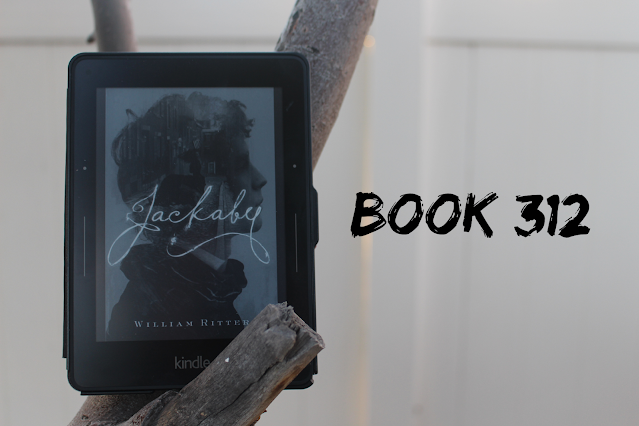
Book 312: Jackaby


"The chief inspector did not seem like the sort of man who could ever be overwhelmed by empathy. He would fit right in to the crime adventures in my magazines. He held the little pad like a shield, stoically barricading himself from the human tragedy. I wondered why Jackaby didn’t carry a little notebook. It struck me that a detective should have a little notebook." 

Dates read: April 26-20, 2019

Rating: 6/10

Sometimes I feel like I pigeonhole my own reading. I try to read across genres, but often gravitate towards the serious stuff ("literary" fiction and non-fiction) because I just assume that it's more likely to be something I'll enjoy. And while I do like a lot of the kind of things that tend to win writing prizes, that doesn't mean it's the only sort of thing for me. I am a creature of habit, especially in my reading habits, but breaking out of a slump often reaps rewards.

What if you took a Sherlock Holmes type, made him someone sensitive to magic and occult rather than the "real world", and then gave him a plucky female Watson? Well, you'd get something much like William Ritter's Jackaby. The titular fellow (that's his last name) is the aforementioned supernatural detective. The high-spirited lady sidekick is Abigail Rook, newly arrived in Victorian-era New England from Britain. She's fled the fancy upbringing she had back home, first trying to follow in her archeologist father's footsteps, ultimately winding up in America. She needs a place to stay, which means she needs money, which means she needs a job. But no one in the town of New Fiddleham seems willing to hire her...and that's when she sees an advertisement for a detective's assistant, which leads her to Jackaby.

On her very first day, she and her new employer find themselves a case to investigate: a murder. The police (with whom Jackaby has a rocky relationship) think it probably has a mundane explanation, but the detective thinks otherwise. Abigail's keen eye makes her a valuable asset as the murders continue and the team investigates, and a budding flirtation between her and young policeman Charlie Cane keeps them clued into the official inquiry as well. There are ghosts, werewolves, banshees and more as they race against time to try to stop the killer before the next victim falls.

This isn't anything that could be called literature by any stretch of the imagination. But it's not trying to be. It's trying to be an enjoyable, easy-reading fun supernatural mystery story, and it largely succeeds. The vibe between Jackaby and Rook will be instantly familiar to anyone who's ever watched Doctor Who (and if you do watch and enjoy that show, this book will definitely be right up your alley), and is blessedly free of romantic tension. Abigail's story, while definitely a familiar one, is well-told, and she feels like more than just a stock character due to Ritter's characterization. Indeed, of everyone in the story, it's Jackaby himself who feels the flattest...his aloofness renders him challenging to understand or particularly like. I think it's supposed to come off as being mysterious and Holmesian, but for me it just made him boring.

Another area where this doesn't quite succeed is as an actual mystery. I am legit terrible at figuring out the who-dun-it question in virtually every mystery I've ever read, and I was calling the big twists by about halfway through the narrative. I think it was supposed to be a fun and exciting mystery more than a genuinely suspenseful and thrilling one, but it could have leaned a little more heavily towards the latter without giving too much ground on the former. On a writing-quality level, Ritter's prose (like much in this genre) is unspectacular, though he does have a pretty good ear for dialogue. So while going into this expecting greatness, or even very-good-ness, is likely to set you up for disappointment, if you just want a tasty little snack of a book, something light and engaging, this is for you. I did enjoy reading it, enough to download the second one in the series to read later, so as long as you know what you're getting going in and keep your expectations reasonable, I'd recommend this!

One year ago, I was reading: Can't Even

Two years ago, I was reading: The Sisters of Henry VIII

Three years ago, I was reading: Once Upon A River

Four years ago, I was reading: The Lady Elizabeth

Five years ago, I was reading: Seating Arrangements

Six years ago, I was reading: All The King's Men

Thursday, July 22, 2021

Book 294: The Buried Giant


"She began to make her way towards the cairn, and something about the way she did so, her shoulders hunched against the wind, caused a fragment of recollection to stir on the edges of Axl's mind. The emotion it provoked, even before he could hold it down, surprised and shocked him, for mingled with the overwhelming desire to go to her now and shelter her, were distinct shadows of anger and bitterness. She had talked of a long night spent alone, tormented by his absence, but could it be he too had known such a night, or several, of similar anguish? Then, as Beatrice stopped before the cairn and bowed her head to the stones as if in apology, he felt both memory and anger growing firmer, and a fear made him turn away from her."

Dates read: February 5-10, 2019

Rating: 5/10

When I was in middle school, I was on the swim team. I wasn't very fast, but I enjoyed being on the team and going to meets. So when I went to high school, I joined the team at that level. It was a whole different game: our local pool was closed for renovations most of the year, so getting to practices (an hour before school and two hours after) took a long time and I was perfectly miserable. I told my mom I wanted to quit. She insisted that I stay on the team, and I swore that if she didn't let me drop it, I would never seriously swim again. She thought I was bluffing. I wasn't. That was over 20 years ago and I haven't swum a lap since.

I don't especially regret this, I do still work out regularly and the way that chlorine dried out my hair and skin is something I don't miss at all. But more than a disinclination to swim for exercise, what keeps me away from the pool is remembering how angry I was when I had to keep swimming for months after I no longer wanted to. In Kazuo Ishiguro's The Buried Giant, remembering is a struggle for the residents of an immediately post-Arthurian era Britain. Axl and Beatrice are an older couple, Britons, who have been relegated to a restricted existence in the warren-like community they live in, but they don't know quite why. They're sure that they would get better treatment with their son, who lives in a neighboring community, so they take the highly unusual step of leaving to go to him.

Their journey takes an unexpected turn almost immediately. At their first stop, a Saxon village where Beatrice often goes to trade, there's a commotion. A young man named Edwin has been abducted by ogres, and though he's rescued by traveling warrior Wistan, the villagers are suspicious of a bite he's sustained during his captivity. Wistan and Edwin flee, taking Axl and Beatrice with them. They encounter, among others, an elderly Sir Gawain. Both of the fighting men claim to be on a quest to kill the dragon Querig, whose breath turns out to be the reason for the mist of forgetfulness that lays over the land...which could have surprisingly significant consequences if it were to go away.

Ishiguro loves a slow-paced, dreamy sort of narrative that reveals its secrets slowly, but there's an unfocused quality to this book that undermines the effectiveness of that approach. The story threads: Axl and Beatrice's marriage and journey towards their son, the Arthurian past, the simmering tensions between the Britons and the Saxons, and a quest to slay a literal dragon...they're not interwoven as tightly and neatly as they need to be to make the whole thing work. The characters have the level of complexity typical of myth and legend, which is to say that they're all quite shallow, more symbolic than realistic. I found it difficult to get emotionally invested in them, despite the fact that Axl and Beatrice's love seems like it should be what roots the story in genuine feeling.

Although the story itself doesn't quite come off, Ishiguro does do solid work on hitting deep themes. The power of remembering (or alternately, of forgetting) on human relationships, both on the personal level, as between Axl and Beatrice, or the group level, as between the Saxons and Britons, is powerfully rendered. The prose is lovely and elegant. I get what Ishiguro was going for here, but the reality is that it just didn't really work. The idea of a fantasy-set novel from an author I love for his ability to evoke strong emotions turned out better than the actual execution. Unless you're really just determined to read everything Ishiguro has written, or you're really looking for a book that's all theme and not much else, I'd skip this one. 
 
One year ago, I was reading: Cat's Eye
 
Two years ago, I was reading: How To Be Good

Three years ago, I was reading: The Romanov Empress
 
Four years ago, I was reading: Me Talk Pretty One Day
 
Five years ago, I was reading: The White Queen

Thursday, June 3, 2021

Book 287: The Winter of the Witch


"But still she crawled out of the cage, put her hands, then her face, into the fire, got to her feet. An instant she stood there, wavering, beyond fear, untouched by the flames. She’d forgotten they could burn her."

Dates read: January 6-10, 2019

Rating: 10/10

I took a creative writing class in college. I can't remember why, it must have been mandatory for my degree somehow, because I haven't ever had any real talent for the subject. It went about as well as anyone could expect given that my gifts lie elsewhere. We had to turn in a piece every week, and I got banned from haiku because I wrote so many. But I struggled hard any time I tried to write a short story, and always for the same reason: I never know how to end it, so it inevitably culminated in the tragic and unexpected death of the main character.

It's hard enough to write an ending to a story, I can't imagine trying to wrap up a whole series. How do you close the door on your characters and their world while making sure that you've done justice to your narrative arc? There have been plenty of authors who've stumbled trying to thread that needle. The first two entries in Katherine Arden's Winternight series have been some of my most-enjoyed books of the past few years, so while I was looking forward to the third and final entry, The Winter of the Witch, I must admit that I was nervous, too. What if the way she wrapped up the story fell flat? Luckily, we as readers have been in good hands so far and Arden proves that the success of the first two entries was no fluke.

As in the previous installment, Arden picks up her narrative right where she'd left off: Moscow is burning and Vasya is a wanted woman. After a narrow, dearly bought escape, she ventures into the realm of Midnight to seek out Morozko, the frost demon with whom she has an increasingly complicated relationship, and free him from the captivity he's been placed under. Meanwhile, her monk brother Sasha is trying to repair his relationship with the Grand Prince of Moscow, now on a seeming collision course for battle with the Mongols. Then there's the influence of the chaos demon Medved, whose interests suddenly have some alignment with Vasya's own. And Baba Yaga herself even shows up. As a decisive conflict draws ever-nearer, Vasya is fighting not just for Rus', but the preservation of the world of sprites and spirits she loves.

Arden has built a beautiful, enchanting world over the course of this series, and this book is a fantastic conclusion to it. I've gotten so interested in Slavic folklore over the course of my reading this series, and this entry added even more shading to this rich background. I was really curious as to how Arden would handle the slow-burning romance between Vasya and Morozko...she's never shied away from the wildly imbalanced power dynamics between them and I thought her resolution to their story hit exactly the right note. And the constant reference to political and religious power struggles within Rus' over the course of the series turn out to be more than just window dressing, introducing me to historical events I'd had no knowledge of beforehand.

There are some little things that I wished had been done differently...I found myself wishing for just a little reorientation at the beginning of the book (unless you've literally read the first two within the past couple months, you'll probably be a little bit lost, like I was). And I admit I'd hoped for a bigger role for Baba Yaga. She's such a prominent figure in Russian mythology that everyone knows she's got to make an appearance in this book, but I wish there'd been more of her. But honestly, this is one of the best series closers I've ever read, wrapping up the story in a way that felt natural rather than forced. This series is amazing and I recommend it to everyone! I can't wait to see what Katherine Arden does next!

One year ago, I was reading: The Moor's Account

Two years ago, I was reading: Good Riddance

Three years ago, I was reading: Boy, Snow, Bird

Four years ago, I was reading: Mrs. Dalloway

Five years ago, I was reading: Spinster

Thursday, December 10, 2020

Book 263: Ready Player One


“I’d been so proud of all this high-tech hardware when I’d first purchased it. But over the past few months, I’d come to see my rig for what it was: an elaborate contraption for deceiving my senses, to allow me to live in a world that didn’t exist. Each component of my rig was a bar in the cell where I had willingly imprisoned myself.”

Dates read: September 22-27, 2018

Rating: 3/10

I started feeling kind of old when I found not just one, but two, 1990s/2000s classic rap and r&b stations on the radio in Reno. Don't get me wrong, getting to have my high school and college party anthems playing on the radio on the regular is great. But it's a reminder that my youth is now behind me. The things that I loved with that pure, unironic love you really only have as a teenager (Clueless, Can't Hardly Wait, the first few Britney albums) are now winking reference points for new teenagers! The nerve! Get off my lawn!

When I was in college, though, it wasn't about the 90s. They were too recent. It was all about the 80s. So many 80s parties. I'll be honest: with a few notable exceptions, the pop culture of the 80s generally doesn't move me. That was not a good omen for my enjoyment of Ernest Cline's Ready Player One. In the near future, there has been widespread economic and ecological damage done to the world. Luckily, there's the OASIS, an immersive virtual reality where people can escape and exist through avatars. OASIS was created by a Steve Jobs-esque reclusive genius called James Halliday, who created a sensation when he died a few years before the novel begins by bequeathing his enormous fortune to whoever first can get to the "Easter Egg" he left behind...with clues rooted in the (you guessed it) 80s pop culture he loved.

Teenager Wade Watts (avatar: Parzival) has a comic book-worthy origin story: after the deaths of both of his parents when he was young, he went to live with an aunt in what are called the "stacks"...mobile homes outside of major cities literally stacked on top of each other. When he's not attending school via OASIS, he's doing what lots of people are doing: being an Easter Egg hunter, or "gunter" for short. When his obsessive devotion to Halliday's favorite video games, music, and movies pays off and he becomes the first person to discover one of three keys that will lead to the final prize, he's locked into a race for the finish. Parzival, his crush Art3mis, his best friend Aech and a team of two Japanese gamers are all competing...and also trying to ensure that an evil corporate conglomerate doesn't snag the prize, and control of OASIS, first.

If you really enjoy 80s pop culture, you'll love this. The idea of a world where our favorite trivia is literally the key to fame and fortune is delightful, and Cline's joy in writing it shines through. The plot moves along quickly, and it's not hard to see why this got made into a movie: it hits all the beats you'd expect it to, so it plays in your mind as you read. There's an emotional satisfaction to knowing the general track of things while waiting to see what little detours the specifics are going to take you on, and some sequences (like the climactic battle) are genuinely thrilling.

As a whole, though, the book fell terribly flat for me. As a non-80s devotee, it often felt like just constant lists of references to things that held absolutely no charm or emotional resonance. The storytelling was extremely basic, and the character development even more so. The issues the book is patting itself on the back for highlighting: that people might not be who they pretend to be for reasons both good and bad, that beauty comes from within, that it's your connection with a person that matters and not what they look like, are dealt with in a shallow, facile fashion that only emphasizes the simplicity of the narrative and the people who populate it. I've read a lot of books that didn't hook me, but few have been so boring as to be as difficult to read as this one. I do understand why it would appeal to people: it's a straightforward adventure story rooted in an era that many find nostalgically compelling. If that sounds fun to you, by all means, you'll likely enjoy this book like hundreds of thousands of people have. If not, though, this is one to avoid. 
 
One year ago, I was reading: Michelangelo and the Pope's Ceiling
 
Two years ago, I was reading: The Goldfinch
 
Three years ago, I was reading: The Games
 
Four years ago, I was reading: The Wonder
 
Five years ago, I was reading: Occidental Mythology

Thursday, July 23, 2020

Book 243: The Completionist


"I can't remember telling her my name. I can't remember breaking her arm. But no, I didn't break her arm. I would never harm a woman, not me, not myself. Yes, I've harmed women. I've damaged their brains, their hearing, their eyes, their skin. I've killed women; I'm sure I have. But that was different. I've never broken a woman's arm. I have two sisters. I would do anything for them, but I would never break a woman's arm." 

Dates read: June 19-22, 2018

Rating: 4/10

I can't think too hard about the amount of information the internet has about me or I get freaked out. I willingly upload the photos that could make facial recognition on any internet-connected camera possible. I tag myself in certain places, opening myself up to profiling based on my patterns of behavior. I click on emails advertising sales from my favorite stores, giving them valuable information about what percentage off I need to see to engage with their content. Even on this blog, I'm constantly talking about my life, my childhood, my past and my hopes for the future. I don't think of myself as a particularly public person, but I've got precious little privacy when push comes to shove all because of my own behavior on the internet.

For many of us, our phones might as well be glued to our hands since they're seldom more than arm's length away. In Siobhan Adcock's future-set The Completionist, they've just cut out the middleman and wearable devices are implanted directly into your arm and connected with your nervous system at a young age. They monitor your health, transmit messages directly, and all you need to do to figure out where your family members are is look, because your GPS position is uploaded automatically. So when his little sister Gardner disappears from the map, recently discharged Marine Carter Quinn is worried. His older sister Fred is even more so, and insists he try to find her. Fred would do it herself, but she's pregnant, which is something of a miracle in the post-apocalyptic Chicago they inhabit, especially since it happened naturally. Ever since the wars, when the water was poisoned and the precious artificial water was developed instead, there have been fewer and fewer babies being born, and most of them are the result of years of expensive fertility treatments.

Carter is glad to have something to do. Ever since he returned to civilian life from the outlying areas where soldiers fight to defend the shipments of water that keep the city alive, he's been having a rough time. It's not just the PTSD, which he treats with growing consumption of alcohol. It's some sort of bioweapon used against the enemy that he inhaled himself, which he can't figure out how to treat at all. He throws himself into the task of looking for Gardner, who was last working as a Nurse Completionist (a sort of midwife/specialized mother-to-be nurse) at a mysterious clinic, trying to track her down before Fred's forced marriage to the one-night-stand who knocked her up. But Gard remains out of sight while Carter goes farther and farther down into an underworld he didn't even know existed.

Let's start with a positive: I absolutely loved Fred as a character. Hard-driving and irrepressibly foul-mouthed, the book is strongest when she's on the page. While Carter and his father (one of the few other significant characters) generally seem mired in their own dramas, Fred comes in and actually moves things forward. In the back half of the book, we get a long series of past conversations between Fred and Gard before the latter's disappearance, and I wanted it to go on forever because she was such an entertaining, lively presence. I basically wanted the entire book to be from her perspective.

But it wasn't, and the choice that Adcock made to have Carter as the protagonist was a significant factor in the book's failure to launch, for me. He's not honestly very interesting, and spends most of his time either drunk or fighting off symptoms of his poison exposure, which makes everything that happen seem disconnected from reality in a way that was not effective. And, not to spoil the book, but the post-apocalyptic world it's set in, in which women who do get pregnant are subjected to almost impossible demands to care for their child literally as soon as its conceived, didn't hold up to scrutiny for me. It would seem that if babies are rare and precious, there'd be more support for the mother rather than punishments. I get the parallel she was going for with our own world, with the expectations we put on mothers and very real pushback they get for failing to meet them perfectly, but I didn't think it really worked in the way she tried to scale it up to official government policy in a world experiencing a fertility crisis. While I'm generally interested in the wave of feminist dystopia that's been pretty trendy in the book world lately, this is not a strong example of a genre and everything about this book apart from Fred is forgettable. It's not egregiously bad, but I don't really recommend it either.

One year ago, I was reading: Sashenka (review to come)

Two years ago, I was reading: The Romanov Empress

Three years ago, I was reading: Station Eleven

Four years ago, I was reading: The Fugitives

Thursday, June 11, 2020

Book 237: The Sky Is Yours


"Swanny breathes in deeply. Perhaps the room brings back memories because of its scent, loam and toffee mixed together—which in fact smells nothing like Swanny's home, but which is the scent of nostalgia itself: sweetness shot through with corrupting experience."

Dates read: May 27- June 1, 2018

Rating: 7/10

As hard as it seems to be to believe, there is still unexplored territory in our world. We've pretty much seen all the land parts, but our oceans are vast and deep and we've experienced only a tiny fraction of them. Some of the weirdest life forms that exist are the ones that live near the bottom, and we don't even really know what all of them are! New discoveries of very unpleasant-looking things are constantly being made! It's half exciting, half kind of one of those things where you wonder if we should be disturbing things that have clearly evolved to be perfectly happy without us, thanks.

Of all the horrifying things that could come up from the seas, it's two dragons that have arisen to menace the skies of what was once something like New York City in Chandler Klang Smith's The Sky Is Yours. It's never explicitly stated whether it's an alternate world or set far in the future, but the echoes of our own world are strong. About 50 years before the book begins, the dragons came out of the sea and began to circle the skies...never stopping, never resting, never eating, just breathing flame. The city tries to hang on for a while, but the middle classes eventually empty out, leaving behind only the incarcerated, those too poor to leave, and the extremely wealthy, who refuse to abandon their land holdings. As one can imagine, this situation is tense and ripe for conflict.

Teenagers Duncan Ripple and Baroness Swan Dahlberg belong to the uber-rich classes of the city. Duncan is a YouTube-style star who has been endlessly indulged for his whole life. Swan has been raised mostly in isolation, with a steady diet of Austen-esque novels which have given her a love for witty repartee, propriety, and the idea of a passionately consuming relationship. Their marriage is being negotiated, corporate merger-style, when Duncan goes out for a spin in his flying machine and crash-lands on an island of trash, where he meets Abracadabra, or Abby for short. That's not really her name, but it's the closest thing she knows from the woman who took her to the island and raised her there before she died, leaving Abby all alone. She and Duncan start sleeping together, and she becomes devoted to him...which he finds so enjoyable he brings her back with him to the city (a development that causes his ostensible fiancee Swan significant distress). The marriage does go through, but almost immediately thereafter the Ripple home is attacked by a marauding gang, driving the three teens into the streets and a world none of them has ever known.

This book is weird. Not garden-variety weird either, really weird. So much so that even quite a while after reading it, I'm not quite able to say whether or not I liked it. I found it undeniably compelling and interesting and loved the character work it does. I also found it alienating and often hard to follow or buy into even if I could follow it. Although it's a debut, it's a very assured book, with Smith seemingly feeling little need to engage in anything resembling explanation. It doesn't feel hostile to the reader, per se, so much as content to be enjoyed by those willing to go along with it and leave in the dust those who want to understand. Understanding isn't what it's trying to offer. Nor does its ending, which feels organic and earned, feel compelled to tie everything up in a nice neat little bow. There's a general sort of message, but what it seems to want, mostly, is get the reader to think about it rather than present an answer.

It's hard to know who (or who not) to recommend this book to. I wouldn't have recommended it to myself but I more or less enjoyed reading it, mostly, once I got into the flow of it. It's a fantasy/sci-fi novel in some ways, literary fiction in others, with elements that will likely be off-putting to those who particularly gravitate to either of those genres. It is very odd. I will say that if anything I've written about it has intrigued you, it's worth giving it a go. You might find that it works for you!

One year ago, I was reading: The Coming Plague (review to come)

Two years ago, I was reading: The Girl With All The Gifts

Three years ago, I was reading: The Man Without A Face

Four years ago, I was reading: The Name of the Rose

Thursday, May 7, 2020

Book 232: Children of Blood and Bone


"The children of Orïsha dance like there's no tomorrow, each step praising the gods. Their mouths glorify the rapture of liberation, their hearts sing the Yoruba songs of freedom. My ears dance at the words of my language, words I once thought I'd never hear outside my head. The seem to light up the air with their delight—it's like the whole world can breathe again."

Dates read: May 7-11, 2018

Rating: 6/10

When I was a little kid, I longed constantly for a sign that I was special. Not "in all the advanced classes" special, I already knew I was smart, but actual special. Someone was going to appear in my little small town, find me, and announce to the world that there had been a terrible mix-up, and I was urgently needed elsewhere so I could fulfill my glorious destiny. Or maybe I had to prove it, had to find the magic that was surely lurking within me and I spent more time than I should admit trying to do like Matilda Wormwood and move things with my mind. It never worked. No one ever came for me, and I grew up and took myself where I wanted to go, which is as it should be anyways.

I suspect, though, that I'm not the only one who nurtured these fantasies of being suddenly wrested from my ordinary experience to have magical adventures. Hence the popularity of "chosen one" narratives, particularly in the young adult genre. Tomi Adeyemi builds on the legacy of the Percy Jacksons and Pevensie siblings that came before, but for her debut novel, Children of Blood and Bone, she grounds it thoroughly outside of the "white people in Western countries" place it has lived for so long. She creates as her world Orisha, loosely based on Nigeria and the magic in her tales comes from the mythology of the region. There used to be magicians in this world, the maji, divided into ten clans with a special connection to gods and goddesses and their representative elements. But then a cruel, autocratic king cracked down and slaughtered the maji. The adults, anyways. The children were left behind.

The loss of her mother in the raid that ended magic haunts teenage Zelie even years later. She takes after her mother in that she's a Diviner, born with the distinctive white hair that marks her as a potential maji and therefore subjected to discrimination. Her brother Tzain, though, is "normal" like their father, who's never recovered from the loss of his wife. Their lives are forever changed when one day Zelie heads to the capital city to go to the market, and runs into Amari, the country's princess, fleeing her father and the palace with a powerfully important scroll. That scroll, along with other artifacts, has the power to bring magic back to Orisha. Zelie, Amari, and Tzain find themselves on the run from the King and his son, Amari's brother Inan, who discovers much to his dismay that he's not as dissimilar from the Diviners he hates as he'd like. An unexpected connection between Zelie and Inan could be what saves them all...or what dooms them.

This is not my usual type of book: I don't read YA particularly often, and it focuses heavily on plot over characterization and prose. Nevertheless, that plot moved forward so relentlessly that it was impossible to resist getting swept up in it, even when it veered toward the ridiculous. From nearly the second we meet them, our characters are under threat, and no sooner does one danger pass than another arises. Even as the story zooms, Adeyemi does some quality world-building, introducing the reader to a deeply earth-rooted system of magic in a way that gave enough detail to be intriguing without gratuitous information-dumping. It's refreshing to read a story that doesn't rely on the same familiar Christian and/or Eurocentric myths for inspiration.

That being said, while the details of the story are fresh, many of the beats are eye-rollingly familiar: enemies to friends, hate to love, capture and rescue. There are serious, serious deficiencies in character development...no one feels like more than a set of keywords and relationships that the readers are clearly supposed to get deeply invested in are so thinly sketched that the "payoff" barely registers. Prose quality that might elevate the more rote elements is absent...the writing isn't at all bad, but neither is it ever more than serviceable. The book doesn't feel like it's meant to be taken in and of itself, but rather as a springboard: for a movie, for sequels. While it's compelling and compulsively readable while it's in your hands, it loses a lot when it's over and you have time to think about it. I maintain only a vague sort of "if it's on the Kindle for less than $5" interest in continuing the series. If you're into this genre and these kinds of stories, you'll probably very much enjoy this book. If you're looking for something to keep you entertained on the airplane, this is a solid choice. If this isn't the kind of story you're predisposed to like, though, this is skippable.

One year ago, I was reading: Battleborn

Two years ago, I was reading: This!

Three years ago, I was reading: Friday Night Lights

Four years ago I was reading: Vinegar Girl

Thursday, December 19, 2019

Book 212: Good Omens


"It wasn't a dark and stormy night. It should have been, but that’s the weather for you. For every mad scientist who’s had a convenient thunderstorm just on the night his Great Work is finished and lying on the slab, there have been dozens who’ve sat around aimlessly under the peaceful stars while Igor clocks up the overtime."

Dates read: March 2-7, 2018

Rating: 8/10

At heart, I'm an optimist. I want to believe that people are good. And while I do believe individual people are often good, I've got a very pessimistic view of people in groups. "People", as in multiple ones in roughly the same place at roughly the same time, are terrible. I've read too many psych experiments (the Stanford prison experiment, the Milgram experiment, virtually any study about in-group v out-group identification) to come to any other conclusion.

Human nature, and the supernatural battle to influence it from God and the Devil, are at the heart of Terry Pratchett and Neil Gaiman's novel, Good Omens. That sounds serious, but this book really isn't: it's breezy, funny, and light, while still managing to play with some weighty themes. The story centers on two beings: the angel Aziraphale and the demon Crowley, who first meet outside the Garden of Eden after the Fall. Over the long millennia that follow, the two (who've settled in England) strike up a wary friendship, though they're constantly acting to thwart each other. When the Antichrist is born, though, and the end of the world starts to become uncomfortably nigh, they realize that even though they "want" the war between heaven and hell to begin so that their side can be eternally victorious, they would actually much rather continue to enjoy their current state of existence, and they conspire to keep it from happening.

There's a mix-up, though, in the birthing ward where the Antichrist is supposed to be placed with the right family. Instead of being given a righteously portentous name and going home with the world-traveling American ambassador, he's actually called Adam and sent home with a perfectly normal little family in a perfectly normal little town in the English countryside. The same perfectly little down where Anathema Device, the last descendant of a medieval witch and prophetess, Agnes Nutter, happens to live. Those prophecies are unfailingly accurate, and they say the world is due to end on Saturday, so things are about to get real.

What a delight this book was to read! The writing is sparkling with wit, and it doesn't have a feeling of being grafted together from the work of two different authors, either. I can't really compare it to both authors on their own, since I've only ever read Gaiman's solo work, but I can tell you that if you generally enjoy him, you'll likely enjoy this as well. There's all kinds of ingenious little touches, like Crowley's obsession with his car, the hellhound sent to be a companion to Adam being inadvertently wished by him from a slavering beast into a little spaniel-terrier type dog with a floppy ear, and the re-imagination of the Four Horsemen into a motorcycle gang.

But it's not just fluffy apocalyptic fun, the theme of the cruelties humans inflict on each other with very little if any direction from the active forces of evil resonates throughout. We so often chose to deal with life's little injustices by getting snippy with the barista, who in turn goes home and gets snippy with their roommate, who takes it out on their partner, etc etc. The shoulder devil is just so much easier and more instantly gratifying to give into than the shoulder angel. I don't personally believe in any sort of incorporeal forces of good and evil, but I do believe we chose every day whether to be our better selves or, well, our less good selves, and this book, as well as entertaining me, reminded me that it doesn't hurt to try to be the latter. Definitely highly recommended.

One year ago, I was reading: The Prince of Tides

Two years ago, I was reading: The Power

Three years ago, I was reading: The Red Queen

Four years ago, I was reading: Occidental Mythology

Thursday, June 27, 2019

Book 187: La Belle Sauvage


"The steamy, noisy kitchen was the safest place in the world, it seemed to him. Safety had never been anything to think about before; it was something you took for granted, like his mother's endless, effortless, generous food, and the fact that there would always be hot plates ready to serve it on."

Dates read: November 2-6, 2017

Rating: 8/10

I tend to think that it's the books we read as adolescents that often end up making the biggest impact on us. It's an age where we're still impressionable, but able to handle sophisticated concepts, and a book that makes the right connection with you can totally blow your mind in a way that you just don't experience much (if ever) with books you read later in life. And I've found that even if I read those books again later and objectively maybe they're not especially good, it doesn't really matter. I still love them.

One series of books that has held up spectacularly well, even from an objective standpoint, is Philip Pullman's His Dark Materials. I recently revisited them as audiobooks and they remain just wonderful. There's always a tension I feel when a beloved book gets revisited by its author after a long time for any sort of companion piece...what if it's just not as great? So I was both excited and wary when Pullman announced a new trilogy, The Book of Dust, set in the same world as the original one, and then again when I finally held a copy of the first volume, La Belle Sauvage, in my hands.

La Belle Sauvage is a prequel, as original heroine Lyra Belacqua is just a baby in this one. Our new protagonist is Malcolm Polstead, a relatively normal preteen boy who goes to school, helps out in his parents' pub, likes to explore on the local river in his boat, and sometimes helps out at the nunnery down the road. Two events happen in a short period of time that change his life: the first is the arrival of baby Lyra at the nunnery, and the second is an assassination he sees while boating. Both of these bring the outside world and its rapidly changing politics much closer to home, and soon even school isn't safe. And then, as an epic flood rages, Malcolm, along with Alice, the older girl who works for his parents, find themselves racing to protect Lyra from danger.

This book does a great job of introducing its world (an alternate universe England known as Brytain, which I think is the first time I've seen it given a name, but I haven't read the novellas yet) to a first-timer, as well as providing backstory on characters and situations that returning readers already know: the rise of the power of the Church, Farder Coram, althieometers, Lord Asriel and Marisa Coulter. And while Malcolm is about the same age as Lyra was at the beginning of The Golden Compass, and they both go on an adventure over the course of the book, they're not especially similar characters: while Lyra was high-spirited and bold, Malcolm is quieter and more solitary. He's got a decent amount of pluck, though, and makes an engaging hero that you get emotionally invested in.

I can't really evaluate this book from the perspective of someone who hasn't read the original series yet, but because of the way that the series is structured (this book is first in time, and then the original series, and then apparently the next book in this series will be a sequel to the original series), I'm going to go ahead and recommend it as a good starting place for people who are intrigued by it. The book is appropriate for older kids, but the series eventually takes a strong theological bent which may go over the heads of less mature ones, and may prompt discussions that parents should be ready for. If I'm being perfectly honest, I didn't think this book was as strong as The Golden Compass (I think that one did a better job of world-building), it might not be a fair comparison because that's one of my favorite books of all time. That being said, this is a very good book and an engaging adventure that has me longing for the next one already!

One year ago, I was reading: Perfect Murder, Perfect Town

Two years ago, I was reading: The Good German

Three years ago, I was reading: Missing, Presumed

Thursday, May 30, 2019

Book 183: Player Piano


"He knew with all his heart that the human situation was a frightful botch, but it was such a logical, intelligently arrived-at botch that he couldn't see how history could have possibly led anywhere else."

Dates read: October 17-22, 2017

Rating: 5/10

I graduated from law school at the wrong time. 2010 was just a few years after the recession began, and it had completed changed the landscape of legal hiring from where it had been in 2007, when I started. Not only were the biglaw firm jobs (that I never coveted) getting slashed, the kind of government jobs I'd been hoping for (I wanted to be a prosecutor) were incredibly scarce, too. I'd hoped that once I passed the bar, I'd get somewhere in my job hunt, but I spent the next six months unemployed. I sent out hundreds of cover letters and resumes and got nothing more than a handful of form letters letting me know they'd keep my information on file. This was one of the worst experiences of my life. Being without a job was awful.

A lot of that explains why I stayed so long in the job I did eventually get, which was a terrible work experience, but that's neither here nor there. What is relevant is the very real sense of usefulness that one gets from meaningful work. This concept is the key idea behind Kurt Vonnegut's first novel, Player Piano. In it, he hypothesizes a world in which America, during one of the world wars, focused on automation in order to win. And it didn't stop simply at military automation...instead, virtually every aspect of American life that could be mechanized, was. A generation later, there are two classes of people: the very smartest, who become engineers and managers, and everyone else, who have the choice to either enlist in the military (which is never sent into action anymore) or unskilled labor doing public works.

Our protagonist is Dr. Paul Proteus. The son of one of the architects of the system, he's in leadership at the facility where he works, but even with his top job and satisfying marriage, he feels like something is missing. When his friend Ed blows into town at the beginning of the story, announcing that he's quit his very similar job and reflecting on the plight of the ordinary people of the world, it kicks off a series of changes within Paul. He finds himself questioning the wisdom of the world that his father helped build and he's helping perpetuate. He finds himself longing to work outdoors, with his hands, in a way where his worth is measured in his ability to do the work that will feed him. This kind of thinking is considered dangerous radicalism.

He joins Ed and some other characters in a secret society dedicated to the overthrow of the machines, and ironically is ordered to infiltrate the same by his superiors as a mole shortly thereafter. He's propped up as the "head" of the organization to take advantage of his famous name as they prepare a rebellion against society as it currently exists. There's a parallel plot in which a foreign religious leader is being given a tour of the United States, meeting people and seeing how "advanced" the West has become...that this man sees the masses of the citizenry as and insists on referring to them (in his own language) as "slaves" is a point that is driven in over and over without the slightest modicum of subtlety.

And it's subtlety that's really missing here. This reminded me of some of Ayn Rand's works...not so much in terms of the ideas expressed, but in the way that the story is really kind of window dressing for the author's larger statement about the world. There's not really a lot of character development that goes on, and the plot is predictable. Vonnegut clearly wanted to draw attention to a trend he saw that was troubling to him and kind of propped up a story around that idea. Also, this was his first novel, and while some debuts bring us a writer already in command of their gifts...that's not the case here.

I actually found the novel more intriguing from the perspective of today...the results of the 2016 election and the way the opioid crisis seems to have hit the so-called Rust Belt especially hard demonstrates the real-world rage and despair that happen when people find themselves deprived of the chance to perform meaningful work. Even within my own lifetime, I've watched the way self check-out has replaced retail cashiers. I do exponentially more of my shopping on the internet than I do in stores. Automation is moving brutally forward, and it could be a much shorter time before most of life is mechanized than we think. So the book, even if it is more a statement than a story, does at least raise interesting questions. If you're a Vonnegut completist, there's merit to be found here, but for anyone else, it's very skippable.

Tell me, blog friends...has automation crept into your job?

One year ago, I was reading: The Sky Is Yours

Two years ago, I was reading: Mrs. Dalloway

Three years ago, I was reading: The Winged Histories

Thursday, January 10, 2019

Book 163: Station Eleven


"The beauty of this world where almost everyone was gone. If hell is other people, what is a world with almost no people in it? Perhaps humanity would soon flicker out, but Kirsten found this thought more peaceful than sad. So many species had appeared and vanished from this earth; what was one more? How many people were even left now?"

Dates read: July 23-29, 2017

Rating: 9/10

Honestly, I would not survive the end of the world. I have no survival skills. I'm not strong, or a good shot, or a person who knows things about plants that you can eat. I'm a stress-crier and I don't think anyone want to deal with that trying to stay one step ahead of the zombies. My ability to perform critical analysis and produce a pop culture reference for every situation is not going to be valuable. So my fingers are crossed that the apocalypse happens (if ever) after I'm already gone.

There are some end-of-the-world scenarios, however, that don't discriminate between the heroes and not-heroes among us. Like disease. In Emily St. John Mandel's Station Eleven, the world is devastated, like 99%-of-the-population-gone devastated, by a mutated flu that gets into the global transportation system. In Toronto, the events kick off when an actor, Arthur Leander, collapses while playing the title role in a production of King Lear. An EMT-in-training, Jeevan, leaps onto stage to try to help, while a young actress, Kirsten, playing a child version of one of the daughters watches it play out in front of her. Within weeks, the world as we know it has ceased to exist. No more internet. Shit, no more electricity. Some people are immune and survive, but are they the lucky ones?

The primary thread of the story follows Kirsten fifteen years later, as she and the other actors and musicians who make up The Travelling Symphony journey through coastal southwest Michigan. Small communities have sprung up along the shores of the Great Lakes, and the ragtag crew that makes up the Symphony continually loop around them, performing, taking their inspiration from a line from Star Trek: "survival is insufficient". The group is excited to return to one particular town, where one of their members left them to settle down, but when they arrive they find their friend gone and things much changed. The town is now controlled by a cult leader known as The Prophet. When a stowaway pops up after the troupe has fled, trouble follows.

There are a lot of time jumps in this book. So much so that it seems almost unfair to call it entirely a post-apocalyptic novel, since a decent chunk of the narrative actually takes place before the flu hits. It goes from Kirsten in her present, to Arthur in his early years, to an interview taking place after the flu but before the principal timeline, and so on and so forth. It sounds confusing, but the way that Mandel writes it it's actually pretty easy to follow. It's a tricky thing to pull off, a narrative that moves around in time as much as hers does, but Mandel is a talented writer and, for my money, makes the emotional impact even stronger by doing it.

This is a wonderful book, y'all. Not only does Mandel handle her narrative masterfully, she also draws characters that resonate. You care about them, even knowing that some of them are going to meet their end when the virus happens. It's not a book like The Road about despair and sorrow. It's a book about people, and the connections that are made and fractured between them. There are certainly dark moments, but the atmosphere she creates is overall one of poignancy and bittersweetness. I loved reading it and am planning on purchasing a hard copy (I read this on my Kindle) so I can have it on my bookshelves to re-read on paper. I recommend it to literally anyone who likes to read.

One year ago, I was reading: Ghost Wars

Two years ago, I was reading: Americanah

Three years ago, I was reading: Mr. Splitfoot

Thursday, June 28, 2018

Book 135: Stranger In A Strange Land


"She had not thought about it at the time, as she had not believed that anything could happen to Ben. Now she thought about it. There comes a time in the life of every human when he or she must decide to risk 'his life, his fortune, and his sacred honor' on an outcome dubious. Jill Boardman encountered her challenge and accepted it at 3:47 that afternoon."

Dates read: March 21-27, 2017

Rating: 4/10

Lists/Awards: Hugo Award, 1001 Books You Must Read Before You Die

Growing up, it's easy to believe that almost everyone lives more or less the way you do. It's only as you get older that you start to realize that's not true. But it's hard to resist the urge to think of the way you grew up as the right way. But what if it wasn't just the people in your neighborhood or town that you were comparing yourself to? What if it wasn't even the same state or country? What if it was a person who came from an entirely different world?

Valentine Michael Smith, the central character of Robert Heinlein's Stranger In A Strange Land, is an entirely unique person: the son of two space explorers on Mars who died shortly after his birth, he was raised by Martians in Martian culture. As an adult, Mike returns to Earth to explore his "home" planet. Initially hidden away in a hospital by the government, which is trying to figure out what to do with him, he's discovered by a reporter and smuggled out by a nurse. That nurse, Jill, becomes his constant companion, sheltering and protecting him as he learns about the world and becoming something of a disciple as he comes into his own and begins teaching Martian ways to his friends and, eventually, the world.

Jill and Mike are taken in, after their initial flight from authorities, by author/lawyer/doctor Jubal Harshaw, an older, cynical man who lives in a sprawling compound with three young women he employs as on-call stenographers for his writing and a handyman to keep things in good repair. This group forms the core of what becomes the Church of All Worlds, a religious movement centered on Mike and the teachings he espouses, including the deep significance ascribed to the sharing of water, the concept of "grokking", and (of course!), non-monogamous sexual relationships. The rise of this church upsets the established power structure of this future Earth, with predictable results for the figure at the center of this upset.

Smith is both human and profoundly non-human, which raises interesting questions about what exactly it means to be a person, a fairly common theme in the science fiction genre. Perhaps because it had been done before, or perhaps because he was disinclined to explore the issue, this is not the route that Heinlein chooses to go. Rather, he uses the story to explore the "Martian" philosophy on life. Which is interesting, for a while. But since the portions of the book that are effectively espousals of this philosophy actually make up a solid majority of the book, with relatively little character development, I found myself getting bored pretty quickly.

The plot is pretty straightforward: it's a messiah tale, with the kind of story progression you'd expect for this kind of tale. The prose is...not fluid. It's clunky, and the long passages of expository dialogue aren't handled with any particular deftness. While it raised some thought-provoking ideas, it never captured me as a piece of literature. I don't think there's any reason genre fiction can't be successful from a literary standpoint, but I never got wrapped up in the story this book was trying to tell me. It may be a sci-fi classic, but it didn't do it for me. I wouldn't recommend it.

Tell me, blog friends...what are your favorite genre fiction books?

One year ago, I was reading: The Good German

Two years ago, I was reading: Missing, Presumed

Thursday, November 23, 2017

Book 104: The Paper Magician


"From her pocket she pulled a tiny snowflake, the one she had stowed there after her first day as a Folder. She rubbed her thumb over its tiny, delicate cuts, grateful she hadn't yet washed this particular skirt. The snowflake still felt frosty, just like real snow. Snow he had made for her. All of it had been for her in one way or another, hadn't it?"

Dates read: November 13-15, 2016

Rating: 5/10

When I was a child, like many other children, I desperately wanted magic to be real. From Tamora Pierce's Wild Magic series to the J.K. Rowling's Harry Potter, the idea that people could have secret powers inside themselves, just waiting to be harnessed, was, well, enchanting. I kept waiting for my own magic to manifest, because of course if magic were real I was going to be special enough to get it. I think most of us longed for a world where we had extraordinary powers at some point, and that helps explain the enduring popularity of these kinds of stories.

It's not really clear in Charlie Holmberg's The Paper Magician if one needs to have been born with magic. Ceony Twill doesn't seem to have manifested any particular powers from what we learn about her life before attending Tagis Praff School for the Magically Inclined. But she does want to learn magic, and maybe that's good enough. In the world Holmberg builds, students take the classes they want and experiment and may aspire to a particular kind of magic, but ultimately are bonded to one particular kind of substance through which they can perform it. Ceony longs to be bonded to metal, but instead, because of a lack of paper magicians, she's sent to Emery Thane, to become his apprentice.

Ceony sulks a little but I was pleasantly surprised at how non-mopey she generally was...it seems like characters like this are usually 100% pro-pity parties. But even though she wishes it hadn't been so, she dedicates herself to learning the craft of paper magic. She's settling into a mostly comfortable groove when suddenly she and Emery, on who she is starting to develop a bit of a crush, are brutally attacked by an evil magician, and although she's been forbidden to, she (of course) adventures to save him. She has to make a journey, both literal and metaphorical, through his heart in order to do so.

The journey through the heart is where most of the character development comes from. It's in a way a kind of blunt plot device...instead of having to learn things about her Emery's inner life organically, she's treated to highlight and lowlight reels of the most sensitive, defining moments of his life. But I think it works, mostly. It not only rounds out his character, but it makes her growing crush seem less like the oh-so-tiresome InstaLove trope. And the system of magic that Holmberg creates for her world is fresh and interesting. But at the end of the day, this isn't high literature. It's fluffy, and perfect for the way I read it: on an airplane. Or at a beach. It's pleasant and light and thinking about it too hard isn't recommended. There are sequels, but I'm not nearly invested enough to seek them out. If you need something to help pass the time, though, you could do a lot worse.

Tell me, blog friends...were you, too, convinced you had magic inside you as a child?

One year ago, I was reading: The Emigrants 

Two years ago, I was reading: Oriental Mythology

Thursday, November 9, 2017

Book 102: What Is Not Yours Is Not Yours


"A key ring gets left in your care and you reject all responsibility for it yet can't bring yourself to throw it away. Nor can you give the thing away- to whom can someone of good conscience give such an object as a key? Always up to something, stitching paths and gateways together even as it sits quite still; its powers of interference can only be guessed at."

Dates read: November 6-10, 2016

Rating: 6/10

I don't know about you, but I am inclined to get stuck in ruts. I have very firm opinions of what I like and what I don't like, and I tend to stick to those preferences very closely. Sometimes to the point of shutting out trying new things just because I'd rather stick to what I know. I'm bubbly and lively, so I think people assume I'm spontaneous and don't really realize the extent to which I am actually a die-hard clinger to my established habits.

This extends to my reading...I'm very reluctant to step outside my usual comfort zones of historical and literary fiction or nonfiction. Which is why the first book I read for my book club was a stretch for me: Helen Oyeyemi's What Is Not Yours Is Not Yours is a collection of short stories. At the time I read it, I didn't have a single other collection of short stories on my shelf, as it's not a format I generally enjoy. But we all benefit from a step outside the old comfort zone every once in a while, eh?

Honestly, I found the book more interesting than enjoyable. This is my first taste of Oyeyemi (although her well-regarded Boy, Snow, Bird is on my shelf, I haven't read it yet) and she's a powerful, talented writer. Most of the stories (but not all) are loosely interconnected...characters introduced in one have a way of showing up in others, but it's like a kaleidoscope in a way: the same pieces getting combined in different ways to create a whole new view. The boundaries of the world she creates in each story are all slightly different, so it doesn't feel cohesive despite the repeating characters and even the repeating motifs.

Possession and belonging, doors and keys, transition and fluidity are all over the stories in What Is Not Yours. Some of the stories really manage to develop these themes in interesting ways that feel complete, but for my money, this was maddeningly inconsistent. There was only one story I didn't like at all, but several of them felt unfinished and slightly underdone to me. Which is why I don't usually read short stories...when they're very good, they're amazing, but when they are anything less than great I find them mostly frustrating. I like immersing myself in the characters and setting of a book, so I find the constant change in setting and characters that short stories bring to be jarring. Most of the stories in this collection were good but not quite there for me...I wanted more from them, and from this book as a whole.

Tell me, blog friends: do you enjoy short stories?

One year ago, I was reading: this book!

Two years ago, I was reading: Kramer v Kramer

Thursday, August 10, 2017

Book 89: The Wolf In The Attic


"I'm getting too big for Pie, Pa says. I like it when he tells me I'm growing up, but I won't let her go. She's my best friend, if a friend is someone you can tell things to, and sit quiet with, and hug in the dark of the night. He doesn't like her. She still has the burn marks on her from that last terrible day, when we were hemmed in between the fire and the sea. The day mama died."

Dates read: September 14-17, 2016

Rating: 5/10

As I'm writing this (late September 2016), there's still a lot of rhetoric around refugees...whether they should be resettled here, what kind of security controls there should be, that kind of thing. Allowing anyone to enter the country necessarily comes with some measure of risk and in a world where terrorism is increasingly present in areas where it hasn't been, I understand the knee-jerk impulse towards fear. But once you start thinking about what it might be like to be a refugee, to be so traumatized and at-risk that you need to leave behind everything you've ever known and loved...I personally can't even imagine going through that. Refugees deserve our sympathy and support.

The refugee experience is a major thread in Paul Kearney's The Wolf In The Attic. Young Anna Francis left behind her home, her language, whatever might remain of her family, and even her original name behind when she and her father fled Smyrna. They anglicized their name and fled to England, and although Anna's father has a hard time completely leaving Greece behind, he tries his best to raise Anna like an English girl. We get glimpses at what used to be, a happy and prosperous family of four living by the sea, making the reality of what is seem even harsher in comparison: eating nothing but bread and butter for days at a time to try to scrimp up enough money to stay current on rent, unable to afford properly fitting shoes for Anna, hardly able to keep the fireplace lit for heat in the winter.

Anna is about to become a teenager, but she's still clinging to childhood (symbolized in the form of a beloved doll, a gift from her long-gone brother, which she keeps close all the time). For me, this is a characterization that works...the experiences she's suffered through would definitely make one leery of change, of adulthood in all of its complexity. But thrown into adulthood she is when her father dies and she has nowhere to go but the workhouse. Nowhere, that is, but to a band of travelers (they're not exactly Romani, but a similar kind of idea) that she'd previously met when exploring the woods near her home. This is where the story veers away from a refugee tale and into magical realism, because Anna finds herself drawn into the centuries-long skirmish between her new friends (who are hiding some secrets) and a sect descended from the Druids. There's even the devil hisownself in the mix for her soul. Where Anna ends up with, and how, make up the balance of the story.

The back half of the story, honestly, was where it lost me. Kearney creates a compelling world for Anna in Oxford...some familiar literary giants even show up, but in a way that I thought was organic and worked naturally within the narrative. The story of Anna and her father and how they got into the circumstances they're in is well-crafted and heartfelt, and Anna is an easy character to connect with: a pre-teen who is bold and curious but not indomitable, and who finds herself just wrenchingly alone when her father is gone. Her first few encounters with the travelers set the stage well for her to flee to them in her time of need. I actually loved the way her encounters with the Devil were written...eerie and unsettling and emphasizing just how vulnerable she is. But the greater war between the travelers and the Druids, how it all plays out...it just fell totally flat for me. It felt like Kearney didn't have a great idea for his own backstory and so provided only minimal details in the hopes that the reader would infer a richer background than is there. It's a promising premise and has merit but is torpedoed by its own last third.

Tell me, blog friends...how do you feel about "famous person" cameos in literature?

One year ago, I was reading: The Lords of Discipline

Thursday, August 3, 2017

Book 88: Smoke


"The laws of Smoke are complex. Not every lie will trigger it. A fleeting thought of evil may pass unseen; a fib, an excuse, a piece of flattery. Sometimes you can lie quite outrageously and find yourself spared. Everyone knows the feeling, knows it from childhood: of being questioned by your mother, or your governess, by the house tutor; of articulating a lie, pushing it carefully past the threshold of your lips, your palms sweaty, your guts coiled into knots, your chin raised in false confidence; and then, the sweet balm of relief when the Smoke does not come."

Dates read: September 10-14, 2016

Rating: 5/10

I'm pretty sure I'm not the only one there whose trust in a person that seemed well-founded turned around and bit them straight in the tuchus. Thankfully, it hasn't happened to me in a while, but I'm sure we've all been burned a time or two by someone who turned out to be not what they seemed. If high school alone doesn't teach you that nice-seeming people can be actually pretty awful (some of us ourselves had our moments of being pretty awful in high school), life always seems to get around to that one at some point. Wouldn't it be nice if there was an easy way to tell who was a good person and who wasn't?

Dan Vyleta's Smoke presents us with an alternative reality historical fiction. In the novel's world, during the Middle Ages, humans evolved a gland inside our livers that produces Smoke...actual, literal smoke that escapes the body (mostly through the pores, as well as the mouth and nose) when someone sins. Well, it's more complicated than that, but that's how we're introduced to it anyways. Aristocrats send their offspring to exclusive schools to learn to control their thoughts and feelings and the resultant Smoke, but the cities, like London (in and around which this book is set), are just thick with it.

At first it seems like an English boarding school book: we're introduced to best friends Charlie and Thomas and resident bully Julius. Thomas and Charlie are a bit of an odd couple: while Charlie is fundamentally decent and well-liked for his openness and good nature, Thomas is proud and defensive, a permanent outsider who can't get his head around the idea that letting well enough alone might be a virtue. We're introduced to their professors and other school leadership, and get a sense of the politics of this world, so similar but different than our own. But when the boys go to visit a relative of Thomas's for Christmas, they find themselves (and Thomas' cousin, Livia) much, much deeper in complicated moral and theological debates than they ever could have imagined.

Up until about three quarters of the way through the book, I was really liking it. Vyleta builds an intricate world and creates characters who hold our interest (the fact that he rotates perspectives fairly frequently helps keep it fresh and give us new information about the world they live in). But then...it feels like he's really trying to raise the stakes super high to give us a big dramatic finale, but he raises them so high that it becomes completely over-the-top and any actual emotional impact it might make is blunted. The book has some similarities in concept to Phillip Pullman's His Dark Materials series (a longtime favorite of mine), and the ending feels reminiscent in a way, but instead of three books worth of storytelling to get us really invested in the outcome, he tries to shove it all into one. It doesn't work.

And since I was pulled out of the story at the end by the ridiculous quality it took on, it made me see other plot issues that I'd had issues with. One of the most glaring, to me, was that while there were several references made to Smoke differing in color and quality according to the underlying emotion that produced it, it was never actually laid out what corresponded to what. I had an e-ARC (electronic advanced reader's copy) so maybe that was changed in the final printing, but I found that personally bothersome. At the end of the day, this is about 75% of a good book but 25% of a pretty bad one. I wouldn't recommend it, but I wouldn't warn anyone away from it either.

Tell me, blog friends...does an iffy ending derail a book for you, too?

One year ago, I was reading: Reading Lolita In Tehran

Thursday, December 29, 2016

Book 57: The Winged Histories


"I don't think writing is sorcery, something forbidden. I think it's more like a comb, it separates your hair more easily than you could with your fingers. It's like riding a horse to go somewhere instead of walking. You go to the same place, but you can carry more. I think writing is a horse. Or it might be a knife. An axe."

Dates read: May 29-June 1, 2016

Rating: 8/10

I am nothing if I am not a creature of habit, and one of those habits is that I refuse to jump into a series from anywhere but the beginning. Books, TV, movies...I don't care if everyone says the first one is bad, boring, or even just not necessary to understand what follows, I read/watch it. Which makes Netflix dangerous for me...so many TV shows to watch right from the beginning! Usually that just means I get choice paralysis and decide to read instead.

Why this particular quirk of mine matters at all is that Sofia Samatar's The Winged Histories is technically a sequel, though more in a "take place in the same world as" and less "follows directly the characters from", as I understand. I wanted to read A Stranger In Olondria, but my local library system didn't have a copy and so I figured that from what I'd read about the book, I'd probably be okay this once not following my own rule and just picking it up. Which I'm kicking myself for now, because I think I would have gotten more out of The Winged Histories if I'd had some background in that world going in.

Which isn't to say that I didn't get anything, or even much, out of The Winged Histories without that background. On the contrary, I found the book beautifully written, and once I got myself grounded in its world, incredibly compelling. It follows four women: the warrior Tavis, Tialon, the daughter of a priest, Seren, a singer and Tavis's lover, and Tavis's sister Siski, a noblewoman, as the Olodrian empire is engulfed in war and rebellion, both internal and external. They're besieged by a neighboring civilization, one of their conquered territories is trying to break away, and a new religion is fighting for dominance with the traditional one...with rumors of people transforming into vampiric monsters growing in the countryside.

I don't usually read war stories, which tend to be men's stories. Endless descriptions of battles and tactical maneuvers make me lose interest quickly (they slowed down my reading of War and Peace significantly when I tackled that one in the summer of 2015). But this one was different: besides Tavis's necessarily martial perspective, the rest of the story dug into how the battles resonate far beyond the fields on which they are fought. The lives of each of these women is thrown into turmoil by the unsettled situation of their world: Tavis flees to the army to escape being used as a political pawn in marriage, Tialon suffers at the hands of her religious fanatic father, who ushers in the new religion and converts the emperor, Seren is a member of the people on whose behalf the civil portion of the war is being fought but who suffer for their "victory" as much or more than anyone, and Siski drowns her sorrow at being parted from the sweetheart of her youth in a hard partying lifestyle. These are technically spoilers, but if I hadn't read a similar summary as I was getting started I would have gotten completely lost in who meant what to whom and what was going on.

It does take a while to get into it and adjust to the setting and situations of the story. Until then, fortunately, the writing sustains interest. The writing is just gorgeous...lush, poetic, and emotionally evocative. There's very little "this happened, and then that happened" going on here, each of the four segments is written in loose clusters of interconnected plot points, full of flashbacks and questions raised that don't get answered until a later part of the story. By the end I could barely put it down. The book is a rich reward for a patient reader.

Tell me. blog friends...do you like war stories?

One year ago, I was reading: Hood

**I received a free copy of this book from the publisher, Small Beer Press, through Edelweiss in exchange for a fair and honest review**

Thursday, October 6, 2016

Book 45: The Crack In Space


"The mind of man was uncommonly stubborn and slow to change. Reformers, including himself, were always prone to forget that. Victory always seemed just around the corner. But generally it was not, after all."

Dates read: April 23-25, 2016

Rating: 7/10

So remember how I was literally just telling you last week that science fiction isn't my genre of choice? Here's another science fiction book! It's a very different kind of science fiction, though. The Crack In Space mostly falls under the sci-fi label by virtue of its author (Philip K. Dick) and the fact that it's set in a future world with some advanced technology. It throws out one of those historical what-ifs that I'm so fond of, except way further back then I'd think to go: what if homo sapiens were not the kind of humans that won out evolutionarily?

The Crack in Space posits our world about 2080 (which, at the time it was published, would have been over 100 years in the future): there is severe overpopulation, to the extent that many young people are choosing to be cryogenically frozen until the labor market is better. It's an election year, and there's a black presidential nominee for the first time ever. That nominee, Jim Briskin, is struggling in his campaign until he's tipped off about some major news: there's been a rift discovered to a whole new world...one that looks like it will support human life. Briskin seizes on this development to announce that it will be his platform to thaw out the frozen and give them this world to settle, and his opponent jockeys to match his promises, when it's revealed that the new world is populated after all, but not by people as we know them. Instead it's Peking man that survived. So now what?

That's maybe half the plot of this slim volume (it's about 200 pages long), but it's the main one. First of all, let me say that I'm glad that we beat out Dick's predictions and had our first black president 75 years ahead of schedule. Moving on from that, though, what I really enjoy about reading Dick's work is that he poses interesting, thoughtful questions rooted in an understanding of human nature. As much as we might think that if we discovered a parallel Earth we'd learn from our past and thoughtfully go about exploration and potential colonization, the reality is that in an election year, politicians would be falling all over each other to posture and secure an important position for themselves. If the world's population was so huge that abortion wasn't just widespread but encouraged, that people were freezing themselves in hopes of a better life someday, it would absolutely end up with people getting sent through the door/portal/whatever without much in the way of an actual plan while news cameras flashed and the powers that be congratulated themselves on a job well done. Maybe I'm a little cynical (I was a litigator and now I'm a lobbyist, so that probably comes with the territory), but I feel like Dick gets how people would actually behave instead of how they'd prefer to imagine they would. I found it a quick and enjoyable read which had me pondering alternate realities.

Tell me, blog friends...if mankind found a new world, would you want to be one of the colonists?

Thursday, September 29, 2016

Book 44: Dune


"Somewhere this night he had passed a decision-nexus into the deep unknown. He knew the time-area surrounding them, but the here-and-now existed as a place of mystery. It was as though he had seen himself from a distance go out of sight down into a valley. Of the countless paths up out of that valley, some might carry a Paul Atrides back into sight, but many would not."

Dates read: April 18-23, 2016

Rating: 6/10

Lists/awards: Hugo Award, NY Times Bestseller

For some reason, I've always preferred fantasy to science fiction. They're similar genres, it's not for nothing that they're usually shelved together: new worlds, usually some sort of hero quest narrative, human stories peppered with imaginative twists that let you see them in a new light. If I'm being honest, usually the most significant different on a fundamental level I notice is that if the story is set in space or has robots, it's science fiction. If there are elves and dragons, it's fantasy. But even though I know intellectually that the differences between them are as much cosmetic as anything, I'd chose fantasy over sci-fi any day. That being said, one of my all-time favorite books, Do Androids Dream of Electronic Sheep?, is science fiction, and Battlestar Galactica is one of my favorite TV shows. Frank Herbert's Dune is the best-selling science fiction novel of all time, so I figured I owed it a try.

Dune drops you right into the story without easing you in with world-building before the plot picks up, which I personally found alienating and made it hard for me to get into it from the beginning. It's the story of a young nobleman, Paul Atrides, whose family is entangled in interplanetary intrigue. The Atrides family is given control of a planet called Dune, notable for being the sole source of a precious substance, the spice melange, which allows people to tap into enhanced mental abilities. When the Atrides are betrayed by their enemies, the Harkonnens, the Duke Leto dies but his consort Jessica and son Paul escape into the desert planet, where Paul (the result of a breeding program by a religious/philosphical/political sect) taps into extraordinary abilities and becomes a religious icon among the native population. Of course, he has vengeance to bring upon the Harokkens and a final battle for power between the families looms.

Having read Joseph Campbell's Hero With A Thousand Faces, it was pretty easy to recognize Paul's story as the Hero's Journey. There's a reason this particular narrative is so popular across time and cultures: when done well, it's really compelling. Was this done well? Not especially, but it wasn't bad or even mediocre. It just didn't do a lot for me, personally. Like I said, it took me a while to get into it and it's kind of a space opera...it starts at like a 7 in intensity and waxes and wanes from there, but it's high drama throughout. I'd have liked a chance to warm up to and get emotionally invested in the characters before they started being put in peril. And on a shallow note about the characters, it bothered me that some of them had fairly standard-issue names: Jessica, Paul, Duncan, even Leto. Then there are some named Thufir, Gurney, and Irulan. I tend to feel like an author should either "go there" with mostly unusual naming patterns or not, but the in-between doesn't really work.

Once I got about a quarter of the way into it, I got a feel for the world and the novel as a whole and I enjoyed it more, but at the end of the day it wasn't really for me. Assuming for the sake of argument a continuum from entirely character-driven stories to entirely plot-driven stories, I tend to prefer things on the character side and I'd slot Dune on the plot side. I'm a big movie-watcher when I'm not reading, and there are plenty of movies that I've seen that I recognize are high quality, but that I don't really like. This is the same kind of deal...I can understand why it's been so popular and sold so well, but I don't know that I'd read it again or recommend it to anyone.


Thursday, August 4, 2016

Book 36: A Calculated Life


"And, rejoining the mid-afternoon crowds ambling in the hot spring breeze, she thought about her work colleagues who went back to their own kitchens in their own homes at the end of each day. She wondered if they, too, gave names to all of their meals."

Dates read: March 27-28, 2016

Rating: 4/10

I get really annoyed by people who smugly insist that they don't eat GMOs. Literally every food available at the store has been genetically modified. The corn we buy at the supermarket bears precious little resemblance to the corn that European settlers would have seen when they came to the United States for the first time. It's bigger, sweeter, more robust. How did it get that way? Cross-breeding! Like everything else out there! Which is just a crude form of...wait for it...genetic modification. If no one objects to cross-breeding, which is necessarily a much more blunt form of genetic modification, why object to much more precise changes in the genome? What if we could make tomatoes bigger and more resistant to disease without losing flavor? Who loses?

Where I think the argument gets interesting is when you start to follow the slippery slope down. We've already made significant genetic modifications (again, through cross-breeding) to our domestic animals. What if we decided to start tinkering with people? It might start out with someone totally benign, like neutralizing the BRCA genes and sparing thousands of women the agonizing choice between their reproductive organs and almost certain cancer. Eradicating Tay-Sachs, Parkinson's. But what about other genetically-related syndromes? What about dwarfism? Down Syndrome? Some forms of deafness that are genetically linked? We start staring down an uncomfortably eugenicist barrel.

A future like this is where we find ourselves in Anne Charnock's A Calculated Life. It's the future and there are three kinds of people: organics (totally normal people except with genetic altering to prevent most diseases and addictions), bionics (given an implant that dramatically increases mental performance), and simulants (humans "born" as adults with incredibly powerful cognitive capacity, basically robots in human bodies). Simulants, like our main character Jayna, live in communal compounds and are leased to their employers for large sums of money, collecting only a small allowance of their own. Jayna and her friends are a second generation of simulant designed to be more "lifelike" than the first, who had no real personalities. Amid worrying reports that the simulants are starting to act, well, more like people, Jayna finds herself convinced that learning more about non-simulants in their natural environment will help her be better at her job (predictive trend analysis) and starts to reach out beyond the borders of the world she's always known.

It's pretty easy to see where the story is going when it starts to go out of its way to bring up Jayna's interesting, good-hearted organic coworker Dave. Obviously, they're going to fall for each other and Consequences Will Ensue. I think I've mentioned before that I'm not at all put off by spoilers, because I feel like they shed light on lazy writing (if all your story has is the twist, it doesn't have anything), so having a good idea of how the plot would turn out wasn't the problem. The problem is that it didn't get there in any sort of interesting or exciting way. Jayna and Dave are never more than thin sketches of characters and their world doesn't have much richness or detail. It feels like a mishmash of 1984 and Do Androids Dream of Electronic Sheep? except without the incisive social insight of either. It's not egregiously bad, just aggressively mediocre.

Tell me, blog friends...do you care about GMOs?